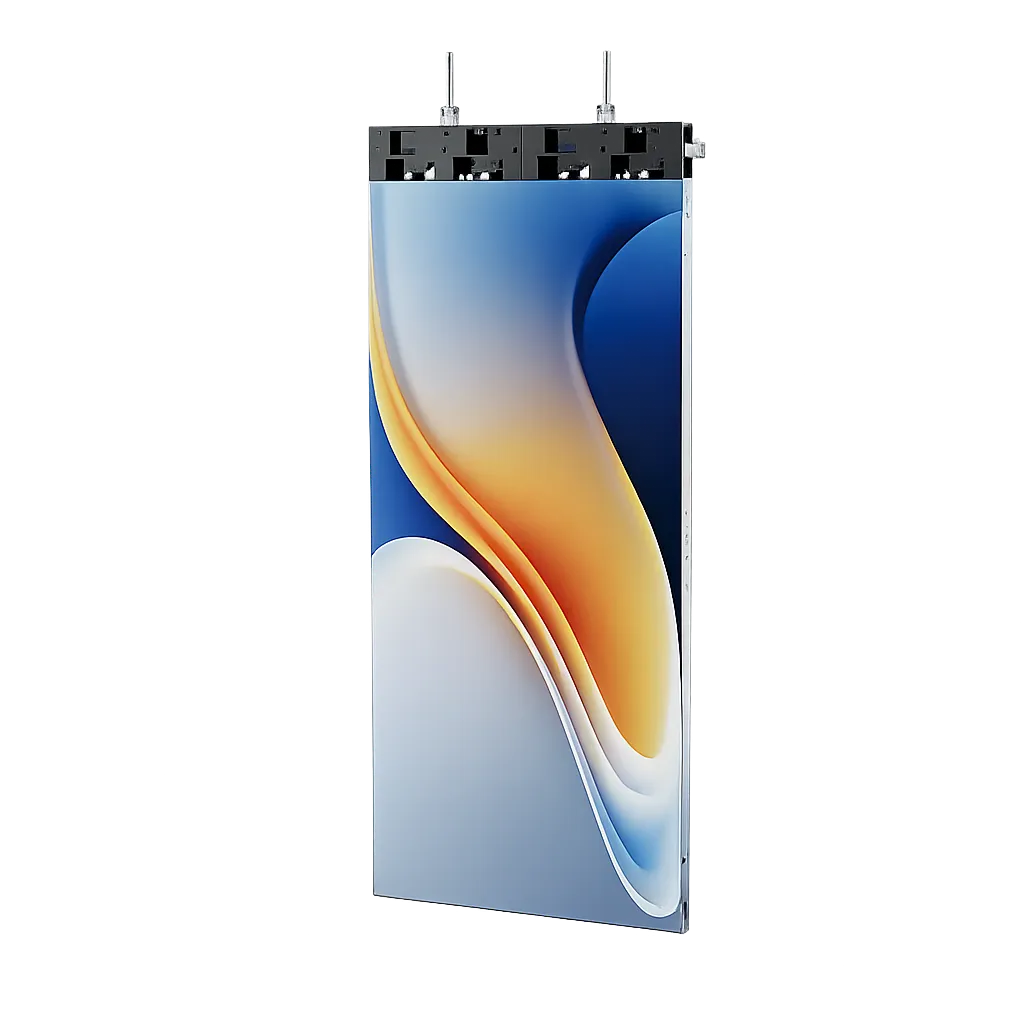
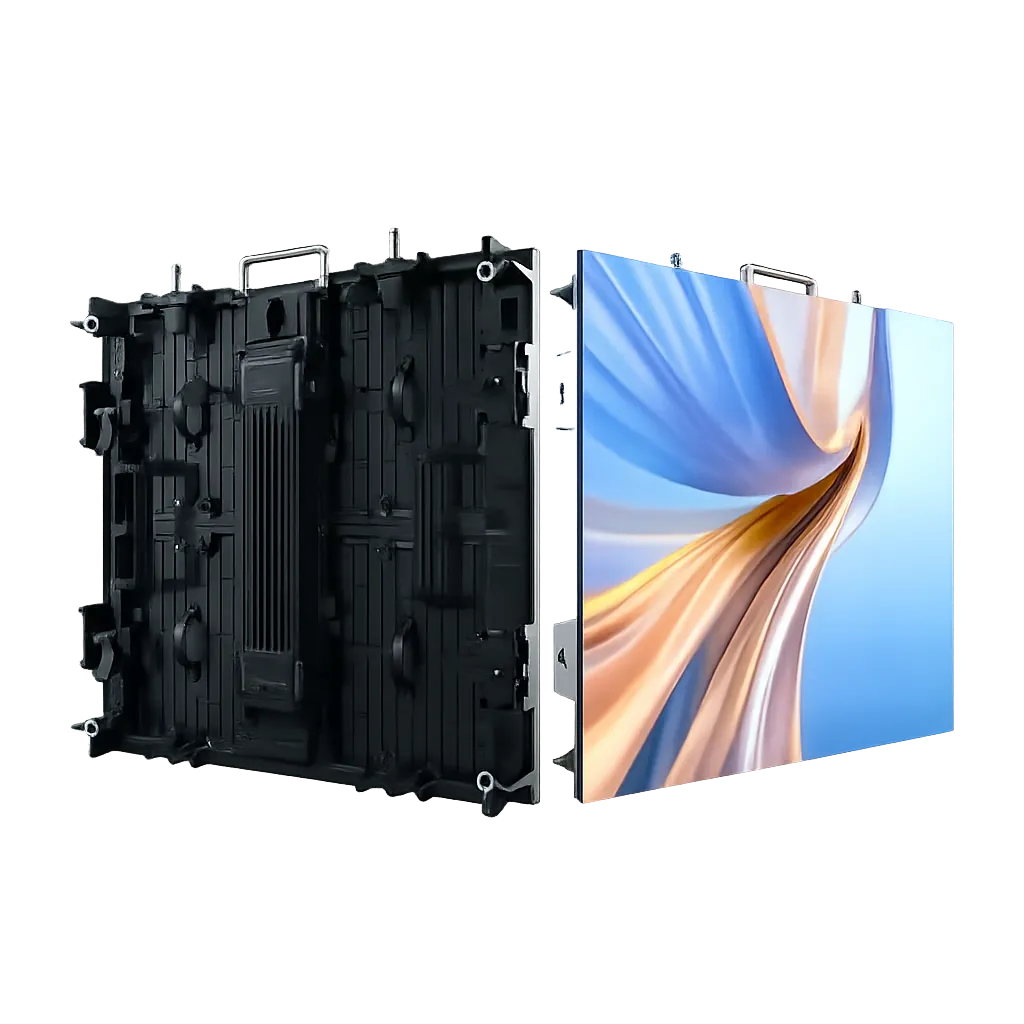
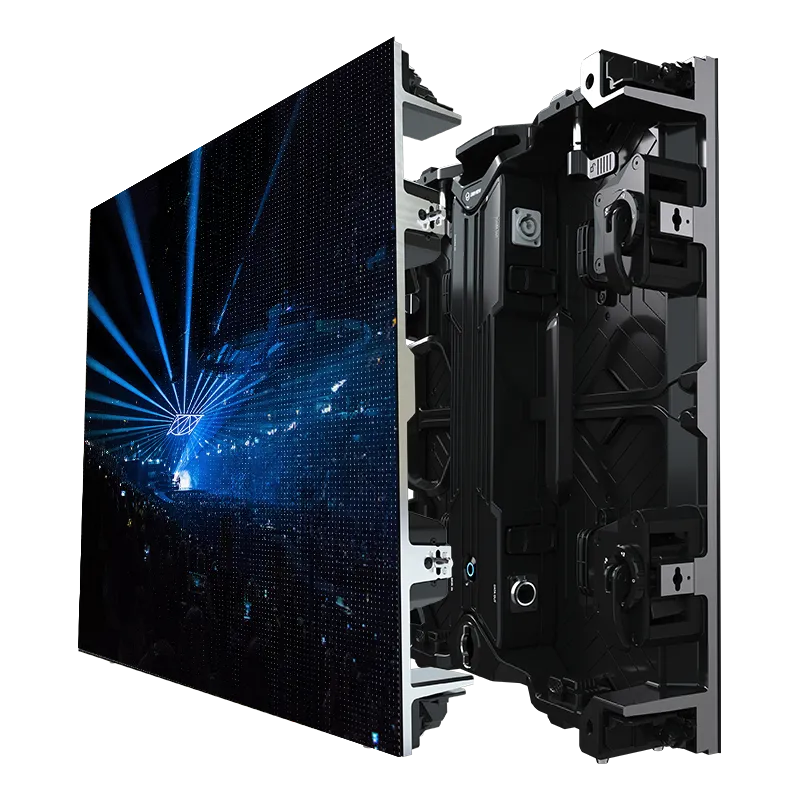
5 m or More
Best suited to large motion graphics, IMAG and stage content rather than close-range fine text.

Transparent Rental LED / Open-Stage Architecture
A transparent rental LED system for concerts, touring, exhibitions and large live-event environments. TSL combines 35% nominal transparency, 7,680 Hz refresh, front service, multiple cabinet formats and curved geometry while preserving visual depth behind the LED surface.
Open-Stage Logic
TSL should be designed as part of the scenic architecture. Audience sightlines, content brightness, fixtures behind the screen, rear weather exposure and front-service access all affect the final result.
Best suited to large motion graphics, IMAG and stage content rather than close-range fine text.
The LED surface remains visually open so scenic and lighting elements can still contribute depth.
Fixtures and structures behind the display become part of the stage composition.
Service clearance is planned from the audience-facing side while rear weather and structure remain controlled.
Open Structure Study
The nominal 35% transparency describes the cabinet's open-area effect. Perceived openness changes with viewing angle, content level, LED package and the brightness of everything placed behind the screen.
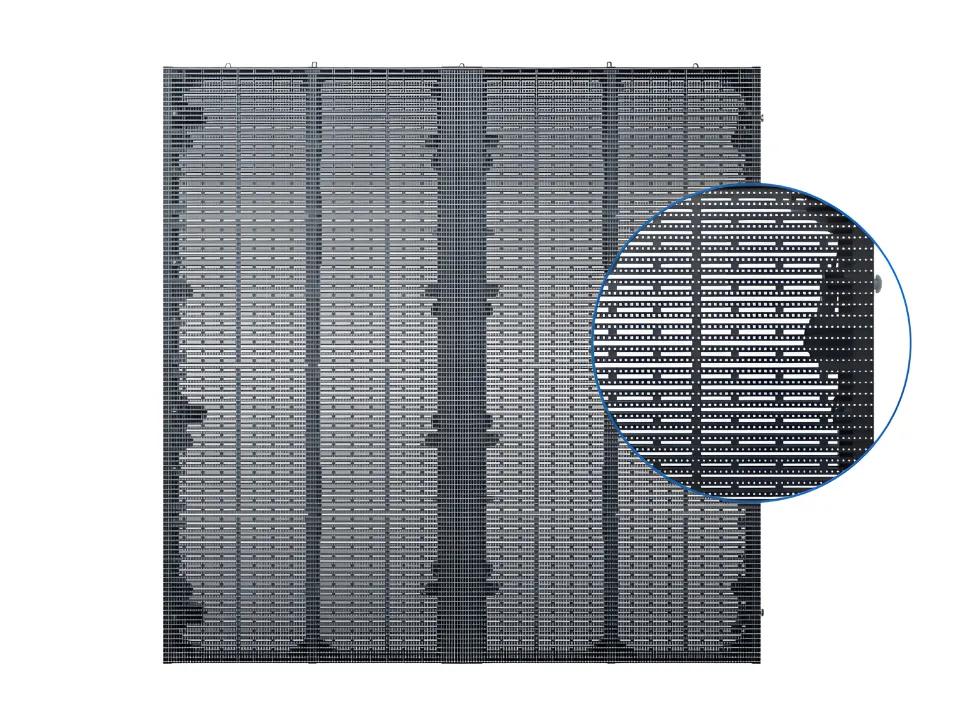
Use representative content and actual stage lighting when evaluating transparency. Darker content or an unlit display reveals more of the scenic environment; bright content reduces the perceived openness.
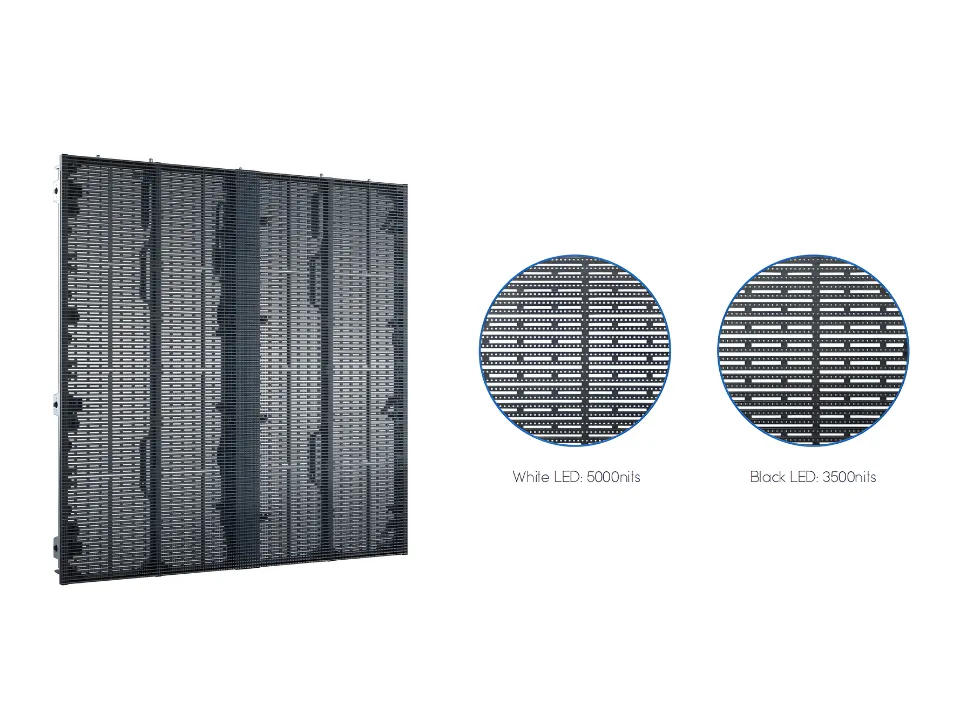
White-light configuration reaches 4500 cd/m²; black-light configuration reaches 3500 cd/m². Select from ambient light, sun direction, show time and required scenic transparency.
Arc Map
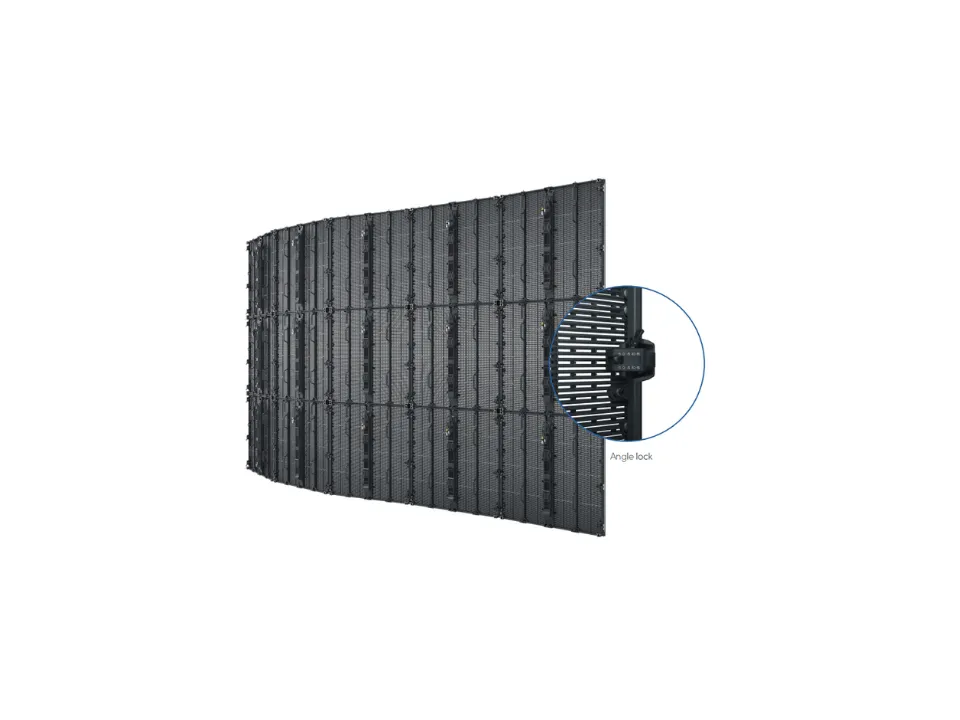
Optional locks provide −15°, −10°, −5°, 0°, +5°, +10° and +15° positions for concave and convex forms. Product material also shows TSL connecting with AM transparent rental cabinets, so mixed builds require a documented transition map rather than an improvised onsite splice.
Service Bay
The product specification lists front maintenance, while the cabinet material shows lock catches and modular power connection. Touring service planning should define clearance, isolation, labeled spares and the replacement workflow.
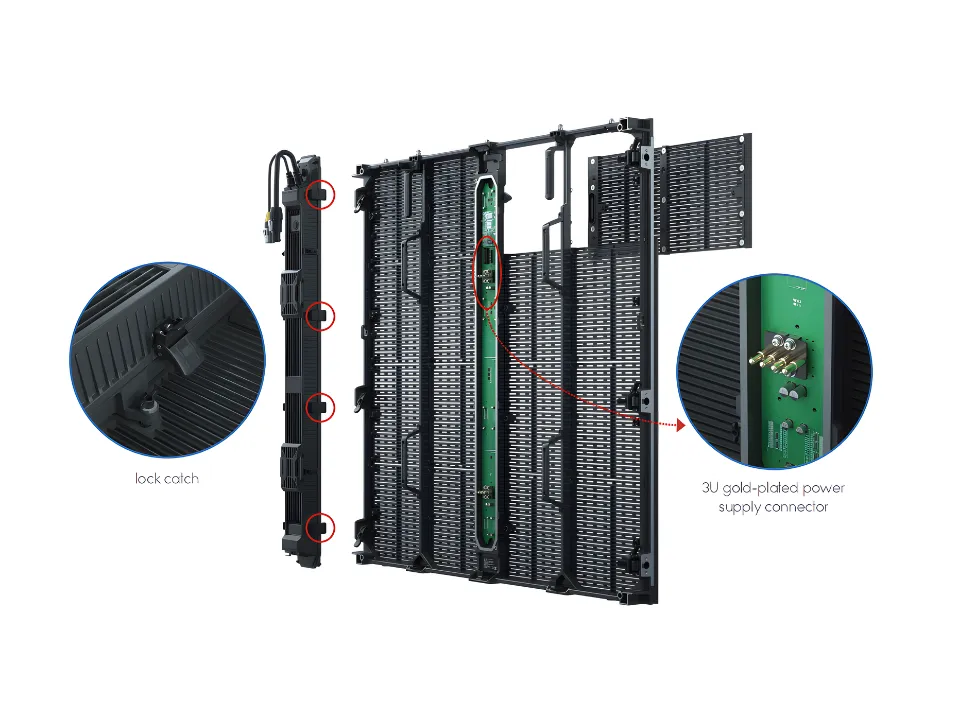
Preserve enough access to remove and replace the required service components from the audience side.
Define safe isolation and connector handling before live-event maintenance.
Prepare modules, power assemblies and receiving-card records for fast replacement.
Keep accepted receiving-card settings and calibration data with the rental inventory.
Stage Sightline Atlas
Transparent LED is most useful when the display must coexist with stage architecture instead of replacing it.
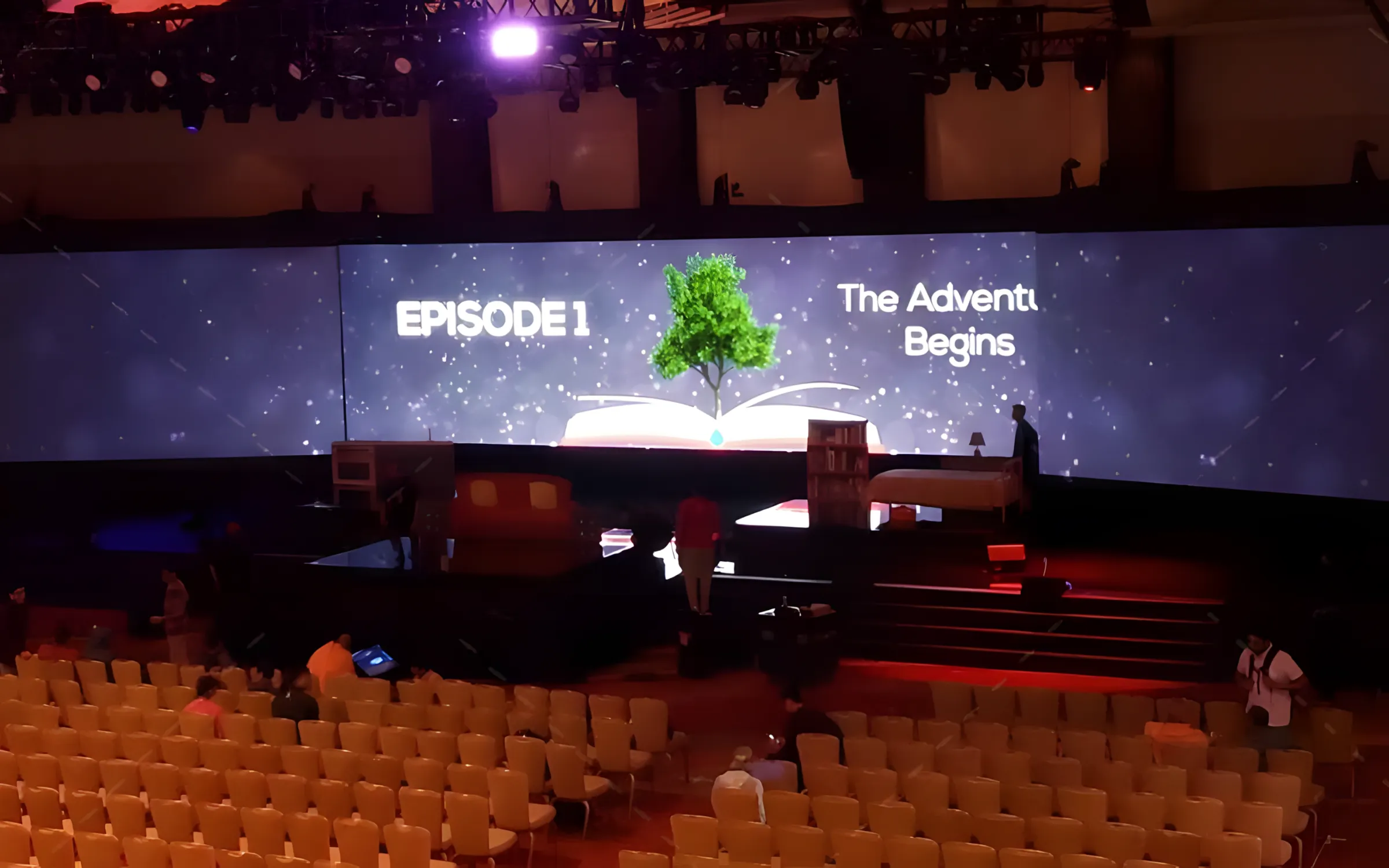
Curved visual layers without fully closing the stage behind them.
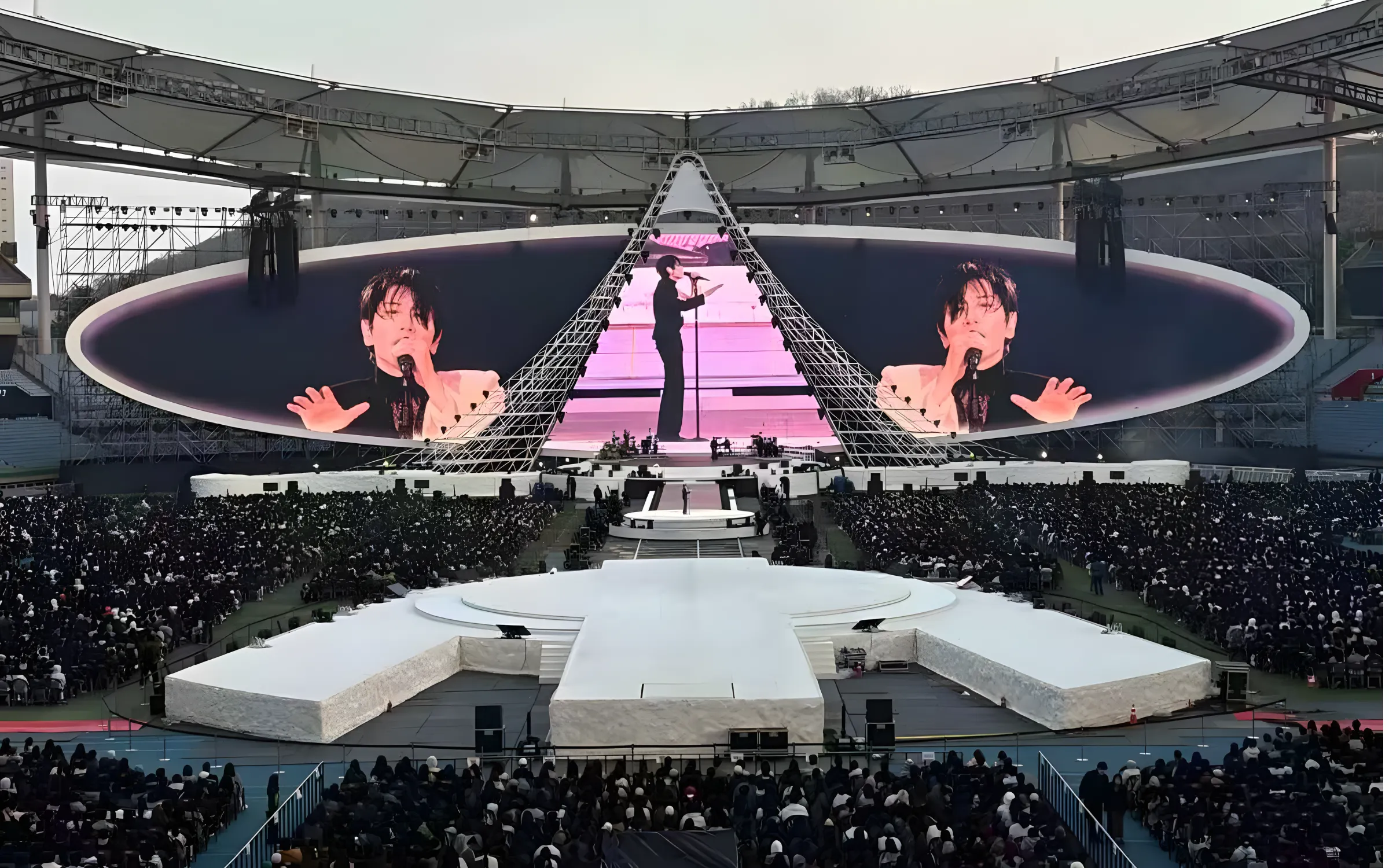
High-output camera-facing content with weather and structural review.
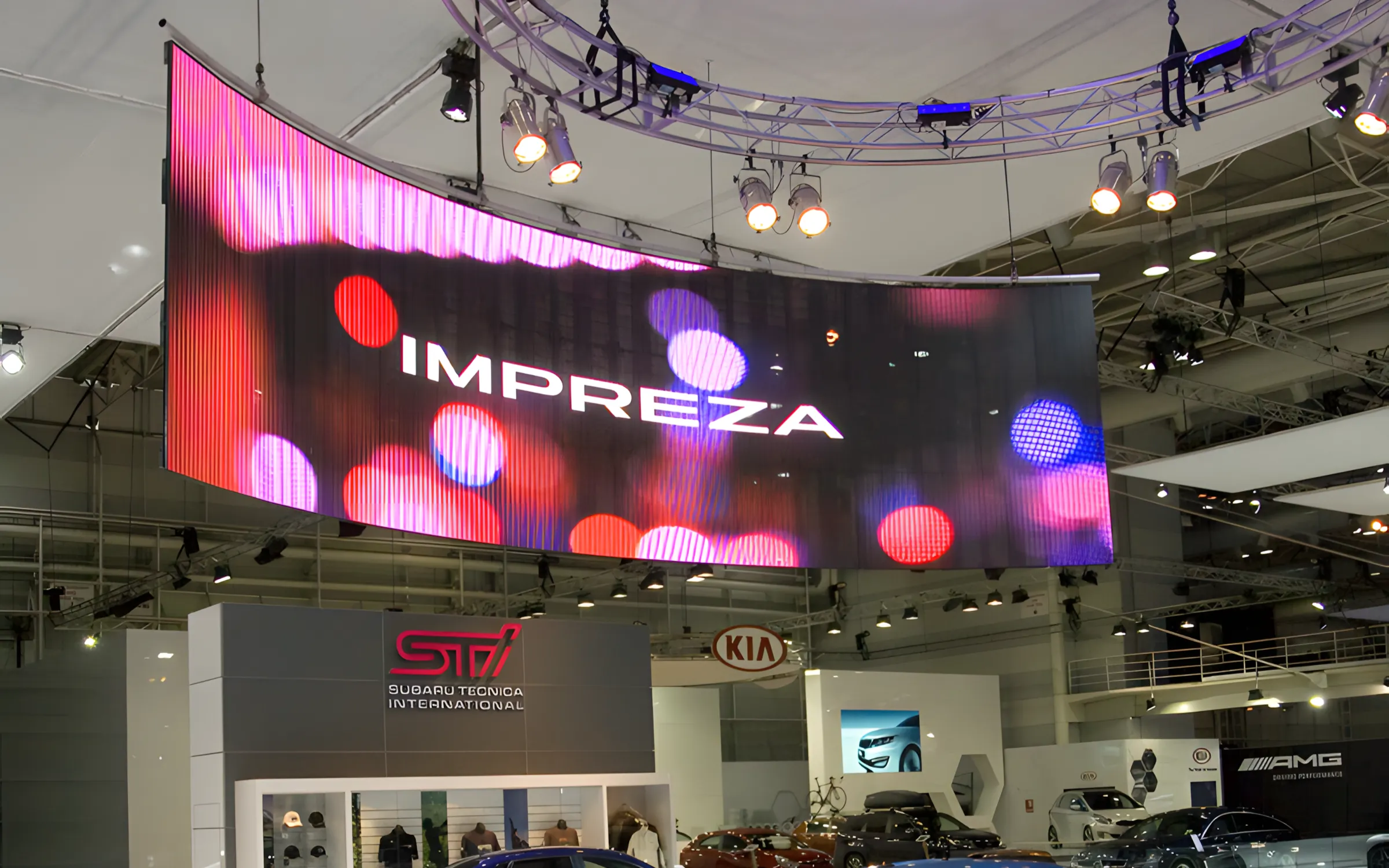
Keep vehicles, lighting and architectural depth visible through branded motion content.
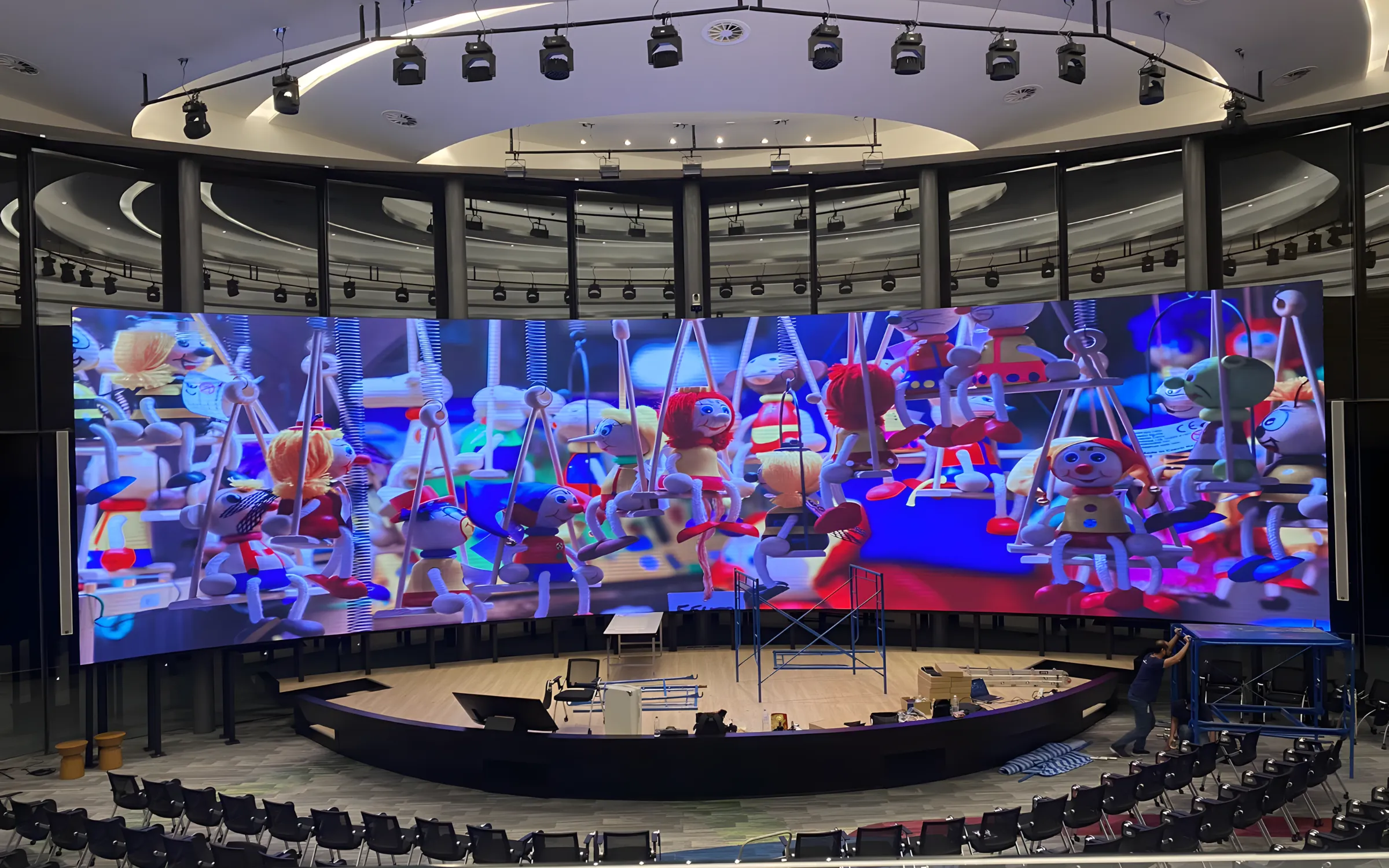
Large visual canvases for launches and temporary brand experiences.
Field Case / Australia
Use the project footage to review how branded motion content, vehicle visibility, stage lighting and curved geometry share the same visual space.
Stage Scale System
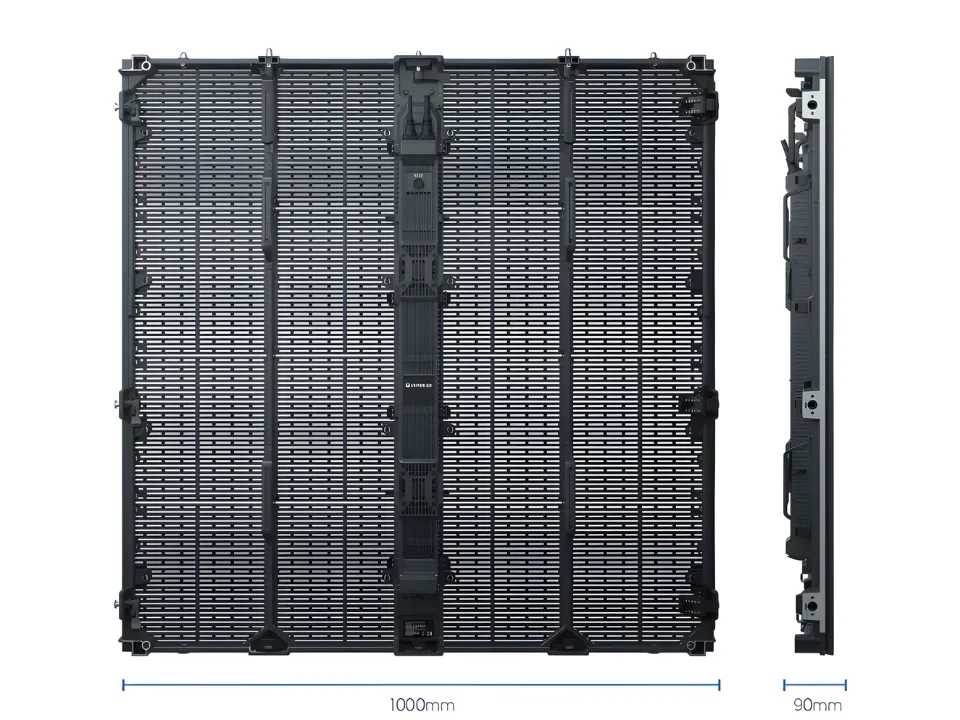
Larger formats reduce cabinet count on wide surfaces, while smaller formats provide more flexibility at transitions and shaped areas. Confirm the approved cabinet map before rigging and transport planning.
Core Specifications
Six core parameters for fast selection and preliminary stage-system planning.
| Parameter | TSL3.9-7.8 |
|---|---|
| Pixel Pitch | 3.906 × 7.812 mm |
| Brightness | 4500 cd/m² white-light / 3500 cd/m² black-light |
| Refresh Rate | 7680 Hz |
| Cabinet Size | 1000 × 1000 × 90 mm / 1000 × 500 × 80 mm / 500 × 500 × 80 mm |
| Power Consumption | 560 W/m² maximum / 187 W/m² average |
| Protection / Service | IP65 front / IP54 rear; front maintenance; hanging or stacking |
Nominal transparency: 35% · Grayscale: 16 bit · Viewing angle: 140° / 140° · Module size: 500 × 250 mm.
Prebuild Freeze
Transparent rental projects become difficult when stage geometry, structure and signal design are approved separately. Freeze these four records together.
Audience, cameras, screen elevation, sun direction, transparent sightlines and service access.
Active dimensions, cabinet sizes, curve direction, angle sequence, mixed TSL/AM transitions and native resolution.
Hanging or stacking, point loads, wind plan, support tolerances and venue limits.
560 W/m² maximum design load, controller, receiving-card map, signal topology, calibration and camera test settings.
Buyer FAQ
Six common questions covering viewing distance, daylight output, project price, transparency, camera performance and curved stage geometry.
Yes. TSL has a recommended minimum viewing distance of 5 m. It is well suited to concert graphics, IMAG and stage backgrounds viewed from roughly 5–20 m, but is not intended for close-range fine text. Confirm audience and camera positions, active dimensions and content detail before approval.
It can be, depending on sun direction and operating time. TSL provides 4500 cd/m² with white-light LEDs and 3500 cd/m² with black-light LEDs. For outdoor use, also account for IP65 front / IP54 rear protection, rear weather management, wind, drainage and shutdown procedures.
There is no reliable single price because project cost changes with screen area, cabinet mix, LED package, curve hardware, rigging, control system, flight cases, spares and installation conditions. For an accurate TSL quotation, provide active dimensions, viewing distance, project country, indoor/outdoor use and required geometry.
The stated 35% transparency describes the cabinet's open-area effect, not image brightness. Lighting, truss and scenic layers remain partly visible behind the screen. Perceived transparency changes with viewing angle, ambient light and content level, so test representative front and side sightlines.
Yes. 7680 Hz refresh and 16-bit grayscale provide a strong starting point for camera-heavy live production. Final performance still depends on shutter angle, frame rate, exposure, processor settings and calibration, so test the actual camera package at the planned operating brightness.
Yes. Optional locks provide −15°, −10°, −5°, 0°, +5°, +10° and +15° positions for concave or convex layouts. TSL can also connect with AM cabinets. Issue a cabinet-by-cabinet map covering angles, seams, support, native resolution and signal topology before production.