Tool-Free Locks
Quick cabinet connection reduces separate hand-tool steps during assembly.

Choose the Uniview LED website that best matches your market or language.
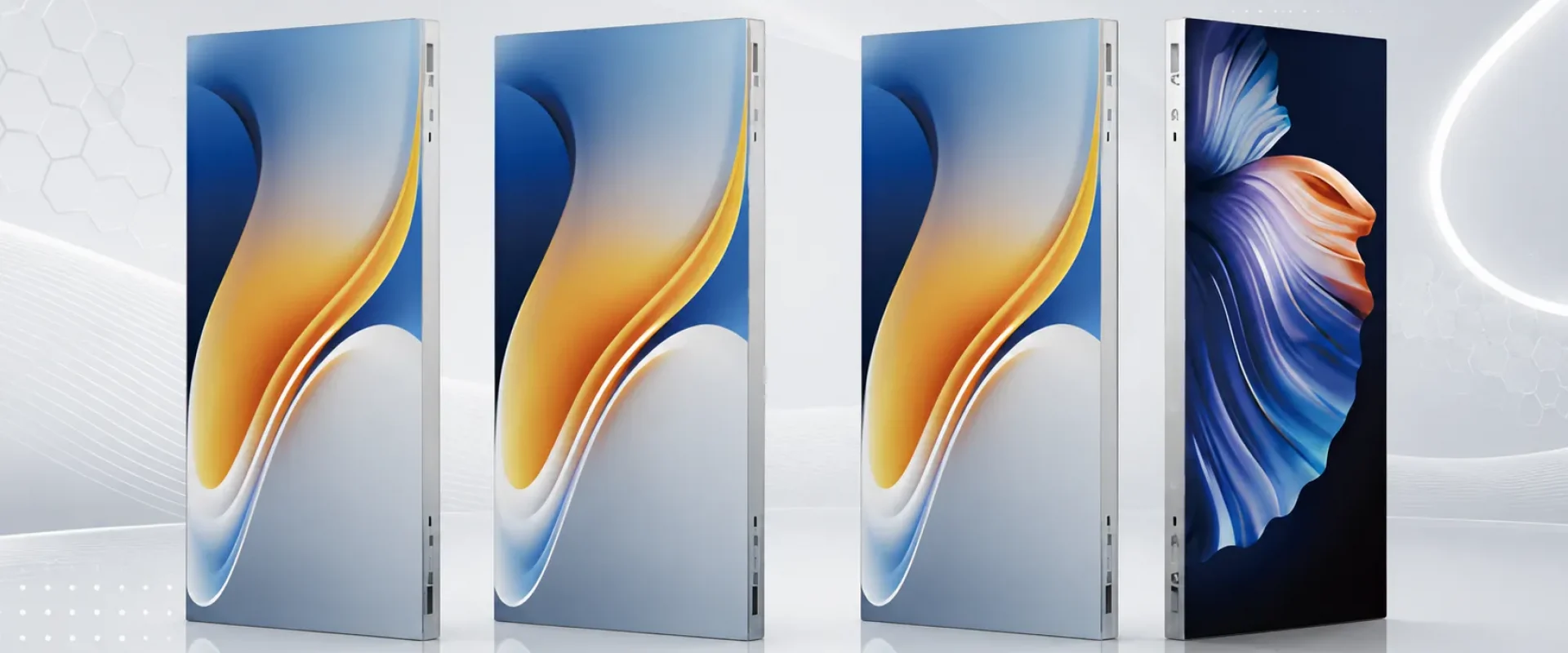
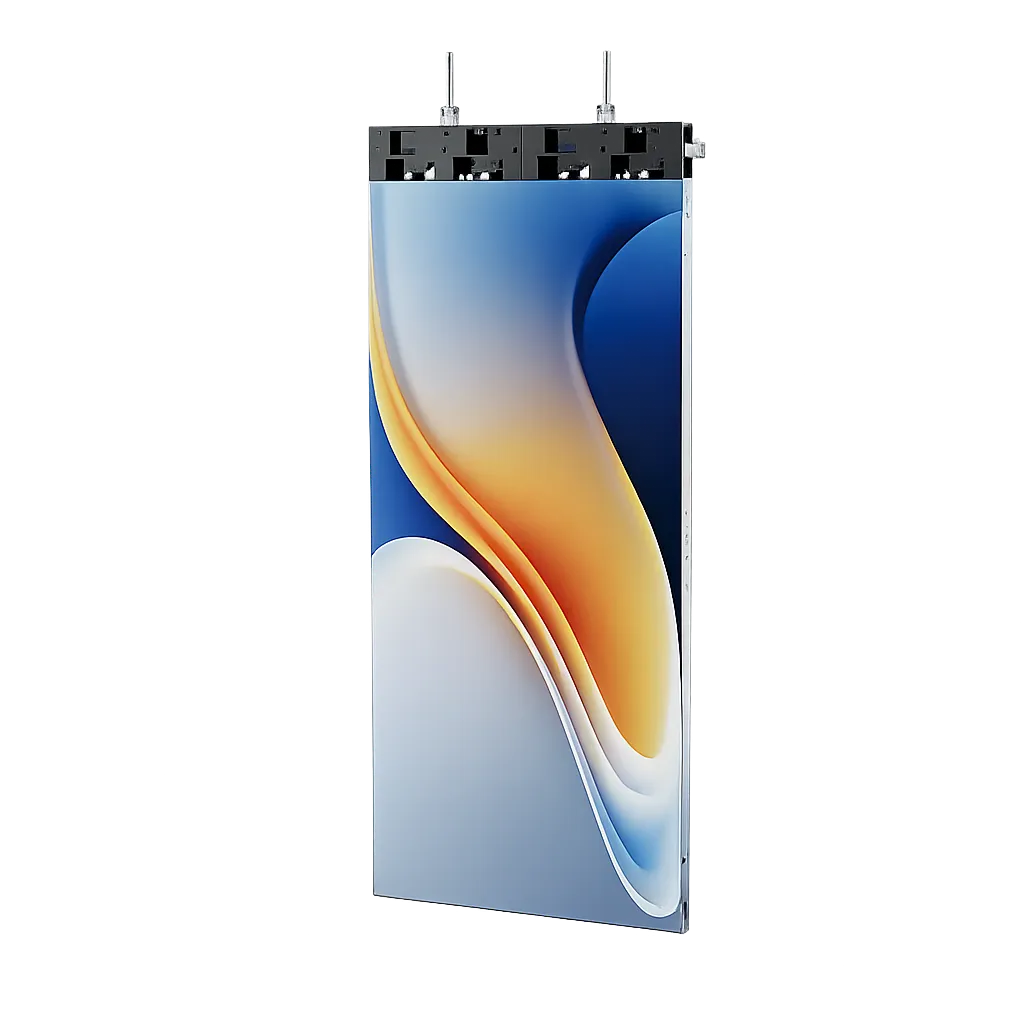
A dual-sided indoor rental LED platform for suspended stages, exhibition aisles, retail windows, broadcast and corporate events. Each face can mirror the same program or receive an independent content feed, while the 47 mm cabinet keeps the central structure visually slim.
P2.604 · P3.125 · P3.906
RDV is most useful where people approach from opposite sides. The two display faces can be mirrored for one shared message or separated into independent feeds for different audiences and content schedules.
Both faces show the same program for one event narrative across two viewing directions.
Separate signal sources allow different content on each side for aisle, retail and suspended applications.
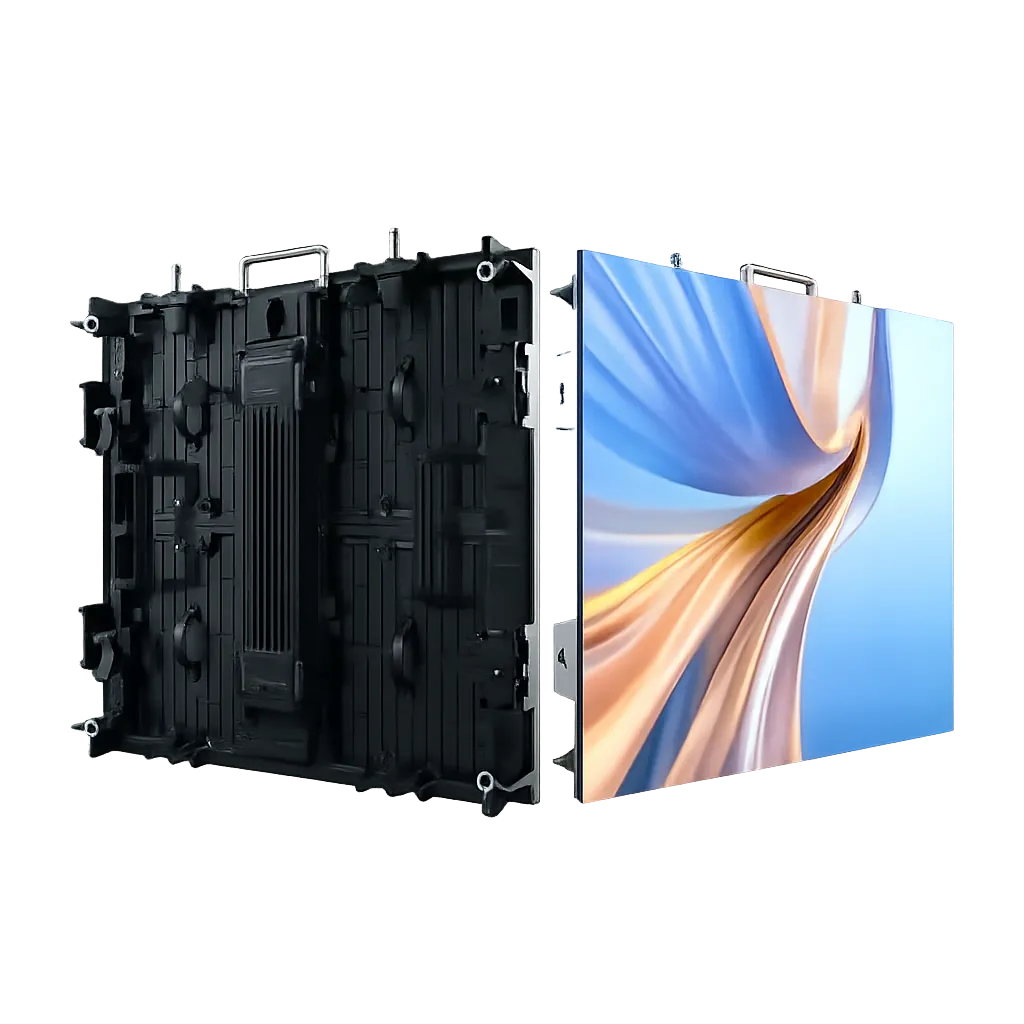
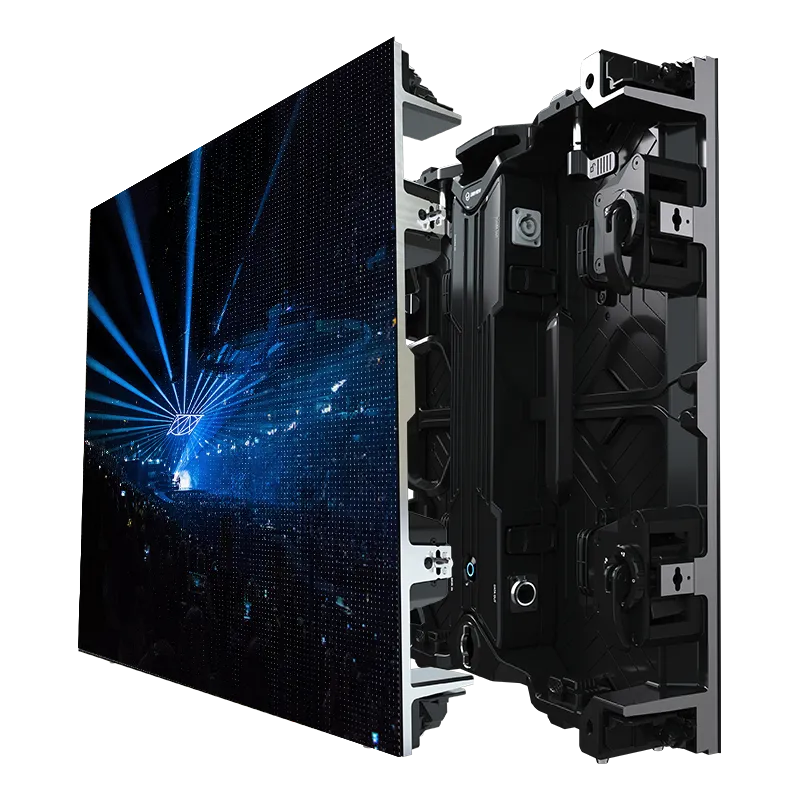
Quick locks, repeatable seam alignment and the plug-and-play rigging interface support the repeated assembly and dismantling cycles expected in rental production.
Quick cabinet connection reduces separate hand-tool steps during assembly.
Repeatable locking positions help maintain cabinet alignment across the suspended wall.
7680 Hz refresh, 15-bit grayscale and 140° / 140° viewing support camera-facing use.
Board-to-board signal transmission reduces data jumpers between cabinets, while locking power connectors and module safety tethers simplify the central cable and safety workflow.
Locking inter-cabinet AC connection helps prevent accidental disconnection.
Cable-free signal cascade removes external data jumpers between adjacent cabinets.
Published module safety tethers secure front-service modules during servicing.
RDV uses front-service modules. Optional smart modules can store calibration coefficients locally, helping replacement modules recover brightness and chromaticity consistency before final verification.
RDV is an indoor IP30/IP30 platform. The most natural applications are places where a conventional single-face LED wall would leave one audience direction unused.
One flown display serving audience zones on opposite sides.
Different messages can face two circulation directions.
Street-facing and interior-facing content from one central installation.
Camera-facing and room-facing content can be planned separately.
Architectural placements where both sides remain intentionally visible.
RDV 2.6, 3.1 and 3.9 share the same brightness, cabinet geometry, weight and power figures; use the tabs to compare pixel pitch.
| Pixel Pitch | 2.604 mm |
|---|---|
| Brightness | 1,000 cd/m² |
| Refresh Rate | 7,680 Hz |
| Cabinet Size | 500 × 1000 × 47 mm |
| Cabinet Weight | 18 kg per cabinet |
| Power Consumption | 410 W maximum / 150 W average per cabinet |
RDV projects become easier to commission when the two content faces, hanging geometry, power distribution, service access and replacement-module workflow are documented as one system.
Define mirrored or independent playback, content resolution and source assignment for both sides.
Cabinet quantity, suspension points, alignment, load path and venue-specific safety requirements.
AC circuits, signal cascade, redundancy, processor outputs and commissioning sequence.
Front-service route, replacement modules, stored calibration data and verification procedure.
Six questions covering two-face content, pixel pitch, camera use, installation speed, module replacement and power / maintenance planning.
Yes. The two display faces can run the same program or receive independent content feeds. This makes RDV suitable for suspended stages, exhibition aisles, retail windows and other locations where audiences approach the display from opposite directions.
Use minimum viewing distance as the starting point: RDV 2.6 for about 2.6 m, RDV 3.1 for about 3.125 m and RDV 3.9 for about 3.9 m. Final selection should also consider screen size, content detail, camera distance and budget.
RDV specifies 7680 Hz refresh and 15-bit grayscale. These provide a strong basis for smooth motion and stable on-camera capture. Final performance also depends on scan configuration, processor settings, shutter speed, frame rate and the camera workflow.
The 500 × 1000 mm cabinets use tool-free quick locks, board-to-board signal transmission and a plug-and-play rigging interface. These reduce external jumpers and support faster alignment, suspended installation, dismantling and reconfiguration.
Optional smart modules store factory calibration coefficients locally. After replacement, the stored data can help restore brightness and chromaticity uniformity. The module should still be verified and recalibrated when required by actual operating conditions.
RDV operates on AC 100–240 V, supports synchronous or asynchronous control and uses front-service modules. Published power is 410 W maximum / 150 W average per cabinet. IP30/IP30 is intended for indoor use, while circuit loading and redundancy require project-specific engineering.
We shall provide you with a detailed quotation within 24 hours of receiving your enquiry.