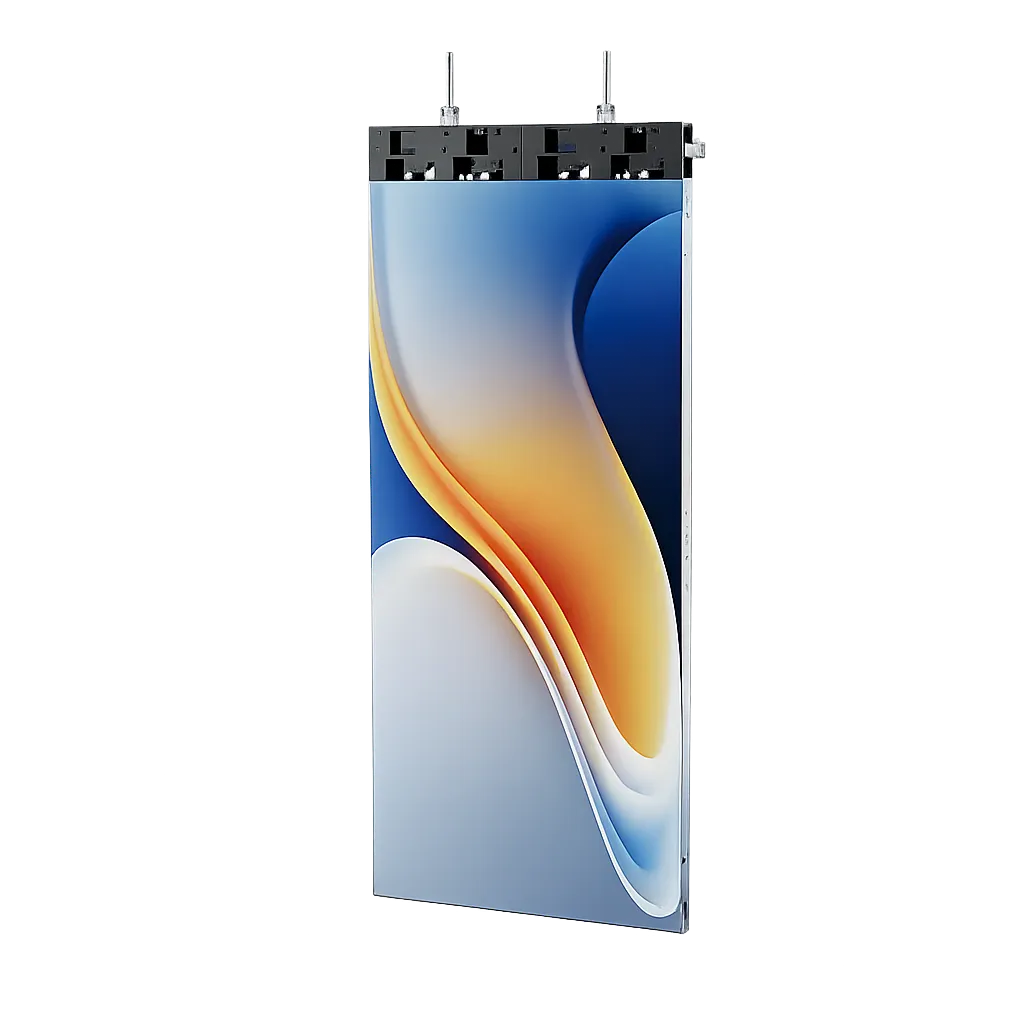
AM Series Keep the Stage Visible.
A lightweight transparent rental LED platform for concerts, touring productions, festivals and branded live events. AM adds a high-output content layer while preserving sightlines to performers, lighting and scenic structures, with 7,680 Hz refresh, front maintenance and optional curved configurations.
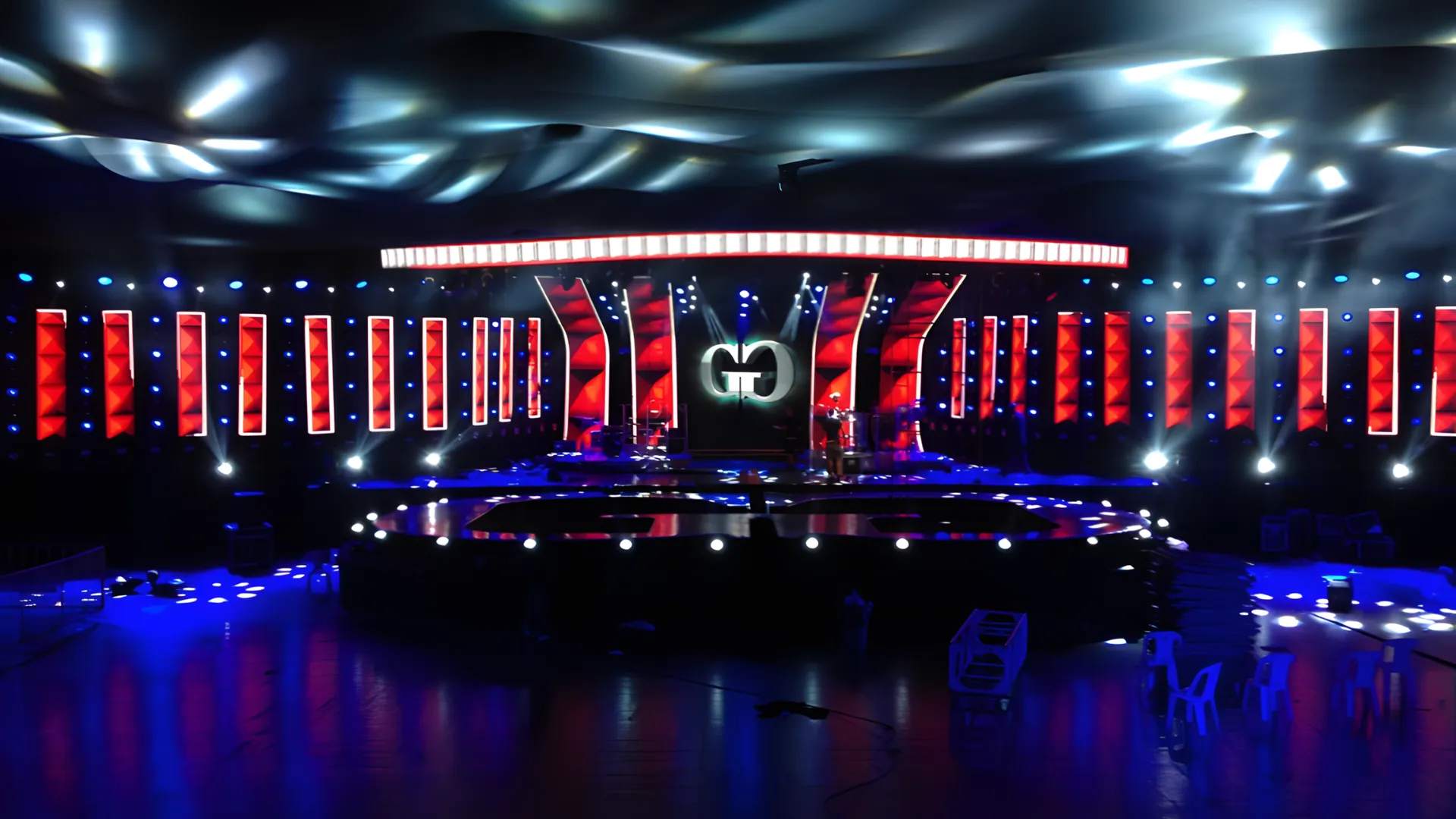
Add moving content without turning the stage into an opaque wall.
AM is designed for productions where LED content, performers, lighting and scenic depth need to coexist. The product decision therefore depends on more than brightness alone: sightline, camera exposure, support geometry and rear-stage composition all matter.
Audience & Camera
Viewing distance, lens position and ambient light define the usable image.
LED Content Layer
3.906–7.812 mm pitch with 3,500–4,500 cd/m² model-specific brightness.
Lighting & Performers
The open cabinet allows stage elements behind the screen to remain part of the visual scene.
Structure & Service
1000 × 500 mm cabinets, front maintenance and hanging or stacking must be engineered as one system.
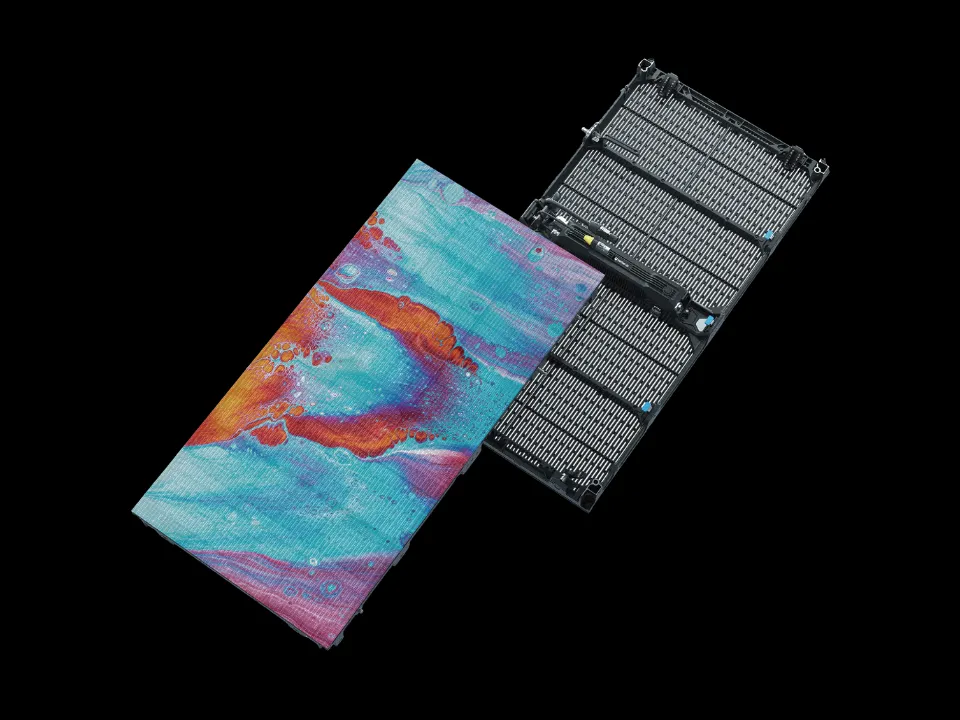
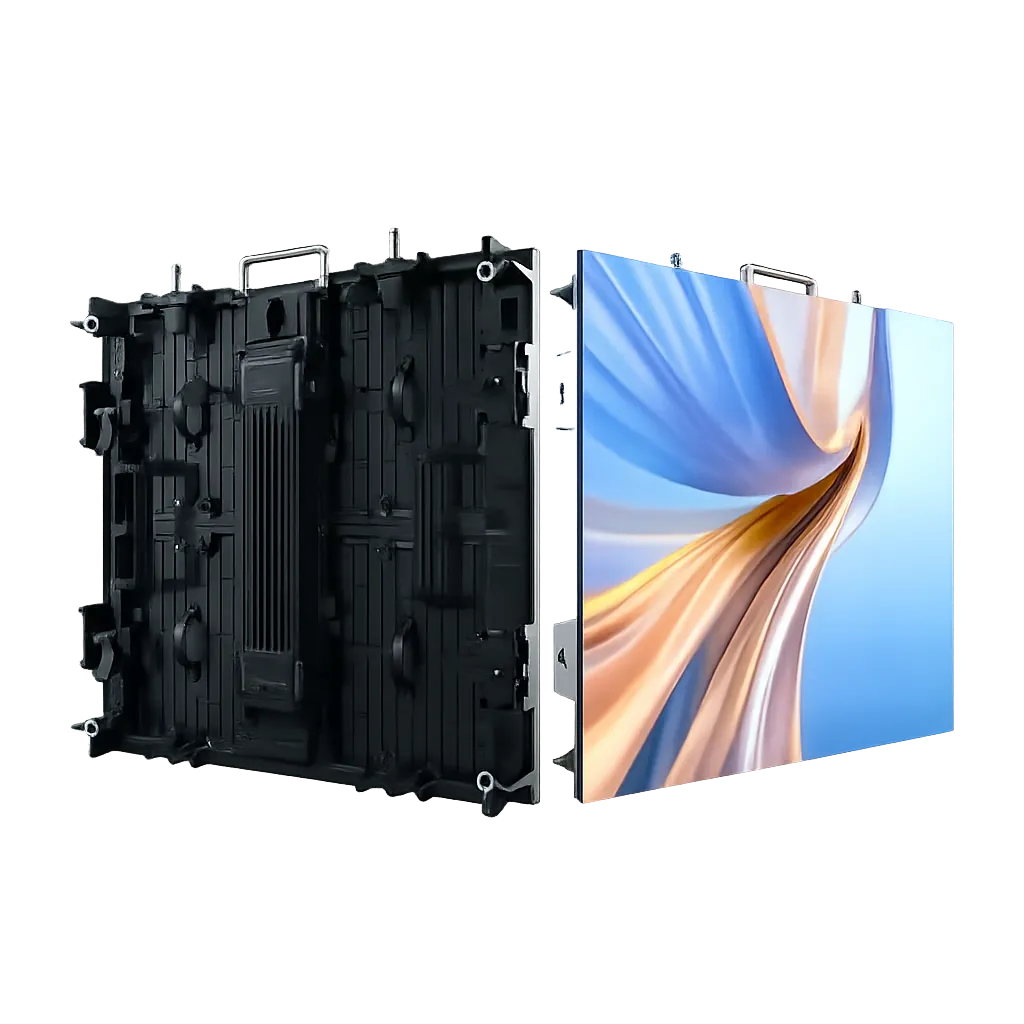
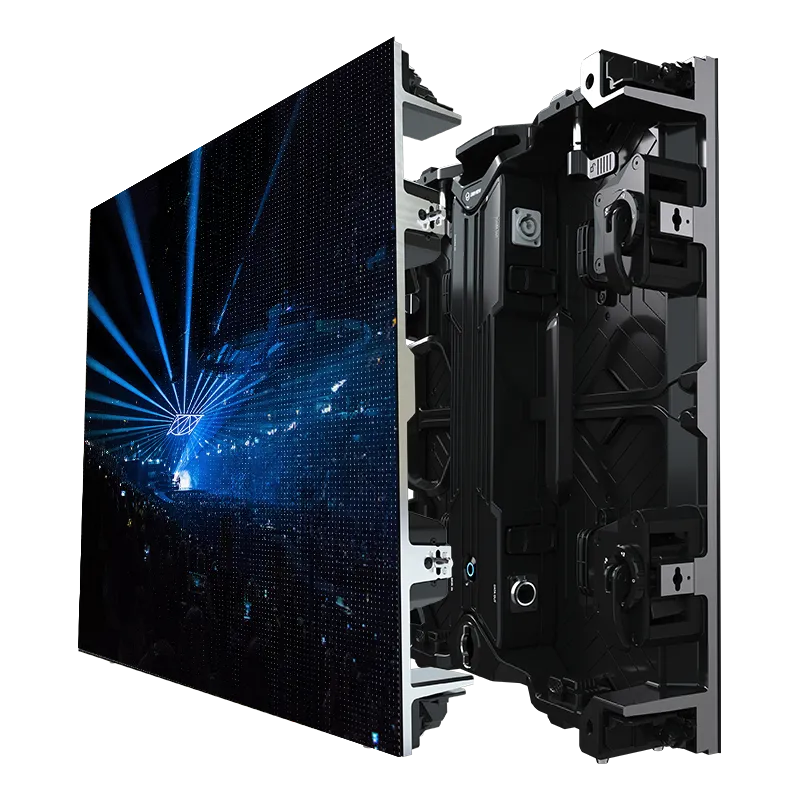
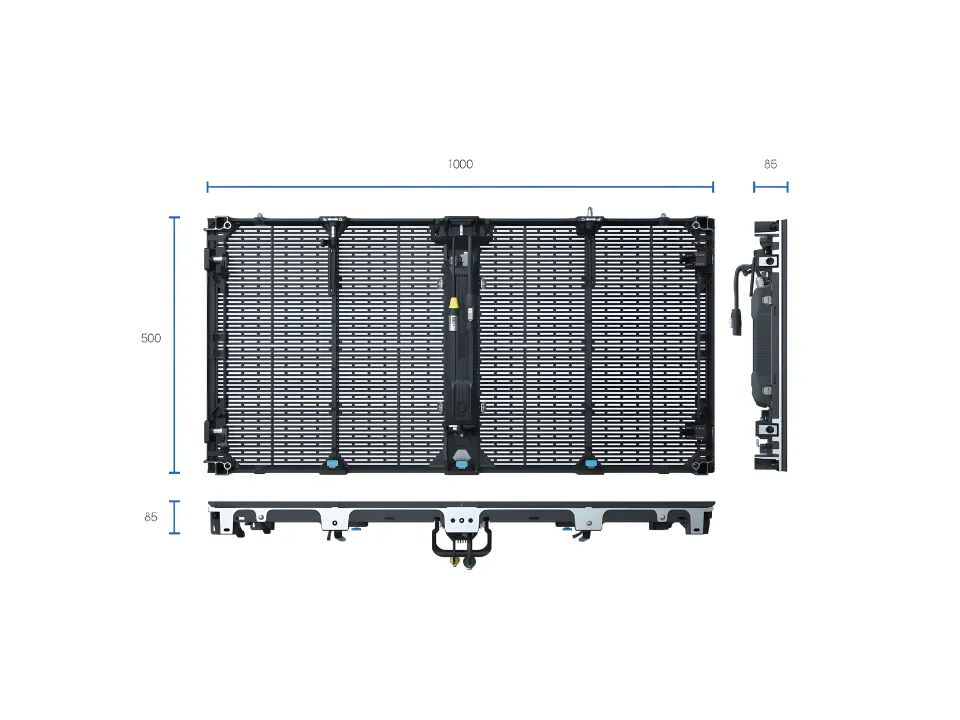
1000 × 500 mm open-frame rental cabinet
Each panel weighs 8.3 kg and is designed for repeated rental installation with front maintenance. Temporary outdoor projects still require approved structure, wind assessment, weather monitoring and a shutdown plan.
Four hardware moments between flight case and show cue.
Rental durability is not one feature. Protection, positioning, component access and cabinet locking must work in sequence during load-in, rehearsal, service and teardown.
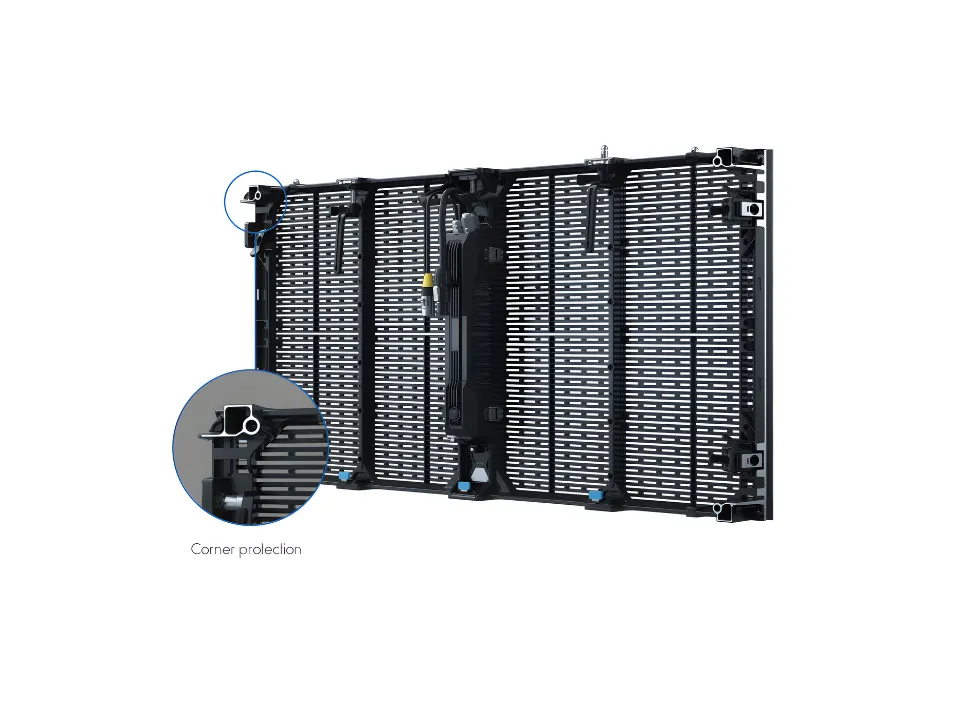
Corner Protection
Protect exposed LED edges during transport, case loading and repeated handling.
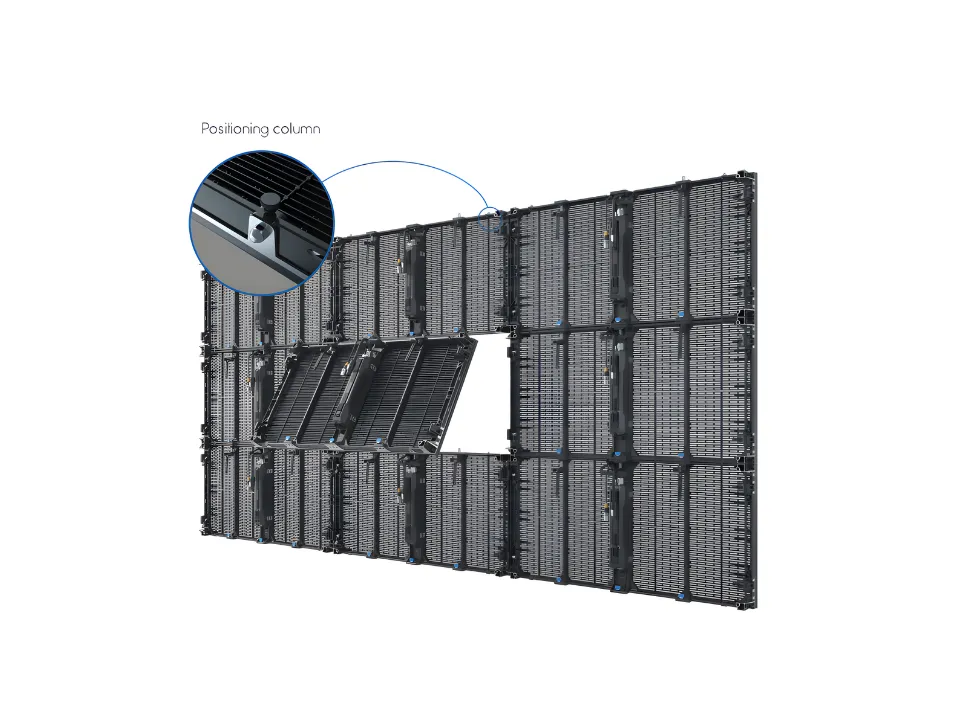
Position & Remove
Alignment hardware supports cabinet positioning and independent panel removal from the wall.
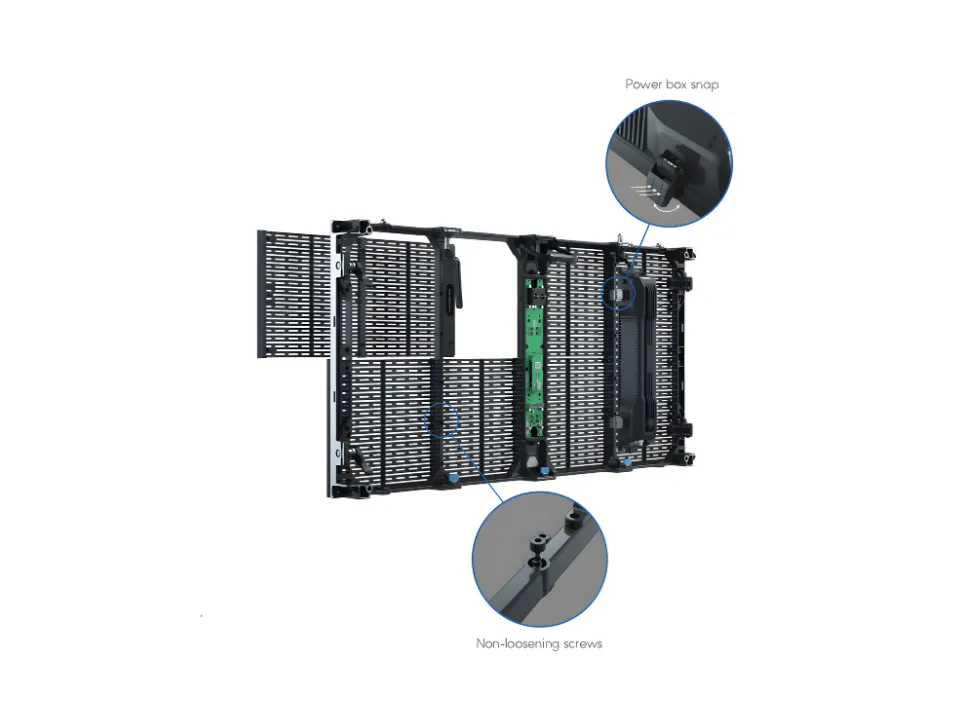
Snap-On Power Box
Front-service access and retained hardware reduce loose parts during live-event maintenance.

Top & Bottom Lock
Verify lock engagement, leveling and structural tolerances row by row during hanging or stacking.
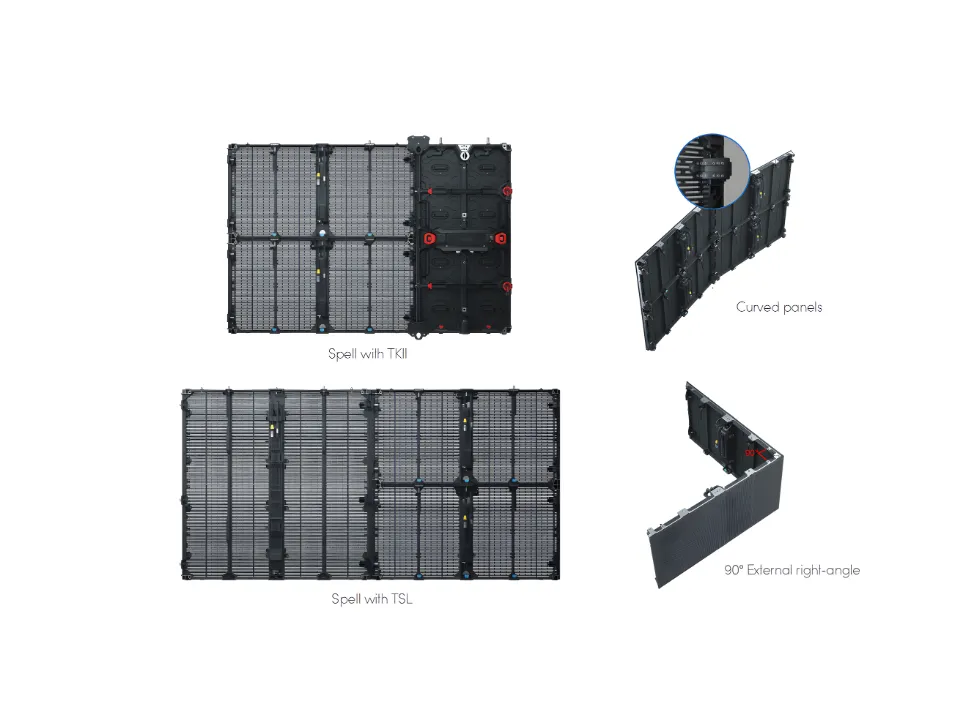
Flat, curved and 90° forms from one rental workflow.
Optional 0°, ±5°, ±10° and ±15° cabinet angles support concave and convex stage surfaces, while an external 90° arrangement creates defined corners. Pre-build every non-flat geometry and approve the mapping, accessories, curve direction and seam consistency before shipment.
Where transparency changes the stage composition.
AM is most useful when the LED surface needs to contribute content without visually closing off everything positioned behind it.
Concert Backdrops
Keep lighting rigs and performer silhouettes visually active behind motion content.
priority: visibility + handlingOutdoor Stage Layers
High-output transparent visuals with project-specific wind, weather and support engineering.
priority: brightness + weatherVehicle Launches
Present branded motion while keeping cars, lighting and scenic depth visible to audiences and cameras.
priority: sightline + cameraBrand Environments
Curved and corner arrangements define zones without building a fully opaque visual wall.
priority: form + opennessTransparent content inside an auto-show environment.
This project shows branded motion content while vehicles, lighting and scenic background remain visible to both the audience and production cameras.
1000 × 500 mm becomes the repeatable stage unit.
The standardized cabinet simplifies screen mapping, transport planning and spare-panel management. Hanging or stacking and front-service access are built into the project workflow.
AM 3.9–7.8 Specifications
Six core parameters are shown for fast project comparison. Confirm the exact LED and brightness configuration before production.
| Parameter | AM 3.9–7.8 |
|---|---|
| Pixel Pitch | 3.906–7.812 mm |
| Brightness | 4,000 or 4,500 cd/m² (white-light); 3,500 cd/m² (black-light) |
| Refresh Rate | 7680 Hz |
| Cabinet Size | 1000 × 500 × 85 mm |
| Power Consumption | 560 W/m² maximum / 187 W/m² average |
| Protection / Service | IP65 front / IP54 rear; front maintenance; hanging or stacking installation |
Four checks before the transparent wall leaves engineering.
A transparent rental screen changes both the front-stage image and the backstage environment. Freeze these items before shipment.
Sightline & Content
Viewer distance, camera position, screen height, content detail and intended scenic depth.
Geometry & Rigging
Flat / curved / 90°, hang or stack, support points, curve direction and venue limits.
Power & Signal
Maximum load, voltage, processor, receiving-card mapping, cable routes and redundancy.
Weather & Service
Rear protection, drainage, wind monitoring, shutdown plan, front-service path and spare parts.
Transparent Rental LED Questions Buyers Ask First
Six common selection and engineering questions covering viewing distance, brightness, price, outdoor protection, curved geometry and camera performance.
AM 3.9–7.8 has a specified minimum viewing distance of 5 m. For stage and exhibition use, confirm the closest audience position, camera position, screen height and real content detail at full scale before ordering.
AM offers 4,000 or 4,500 cd/m² with white-light SMD1921 and 3,500 cd/m² with black-light SMD1921. Suitability depends on direct-sun exposure, screen orientation, show time, content and camera exposure. Confirm the actual daylight condition before production.
There is no reliable single price because total system cost changes with screen area, brightness configuration, cabinet quantity, curved hardware, rigging, processor scope, flight cases, spares and installation conditions. For an accurate AM quotation, provide active dimensions, project country, viewing distance, indoor/outdoor exposure and flat or curved geometry.
AM is rated IP65 at the front and IP54 at the rear, with a specified operating range of −20 to 50 °C. Outdoor rental use still requires rear weather management, protected connectors, drainage, seal inspection, wind/rain monitoring and an approved shutdown plan.
Yes. AM supports optional 0°, ±5°, ±10° and ±15° cabinet angles, and product material shows an external 90° right-angle configuration. Curved and corner builds require the correct accessories and a pre-build test. Define radius, curve direction, corner orientation, mapping and structural tolerances before shipment.
Yes. AM specifies 7680 Hz refresh and 16-bit grayscale, providing a strong starting point for camera-heavy concerts, launches and live production. Final results still depend on frame rate, shutter angle, exposure, scan mode, processor settings and calibration, so test with the actual camera package.