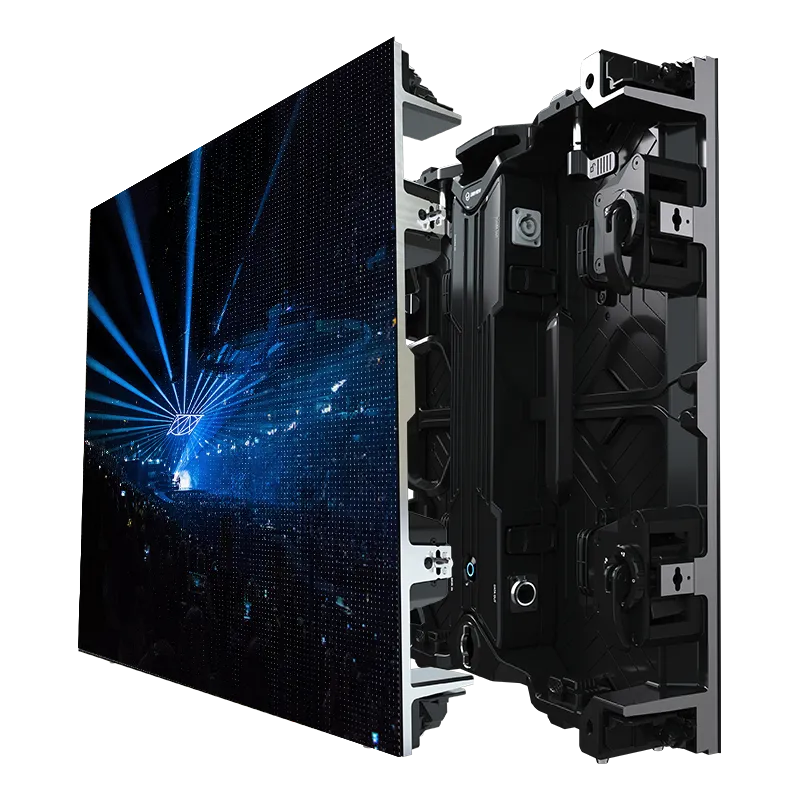
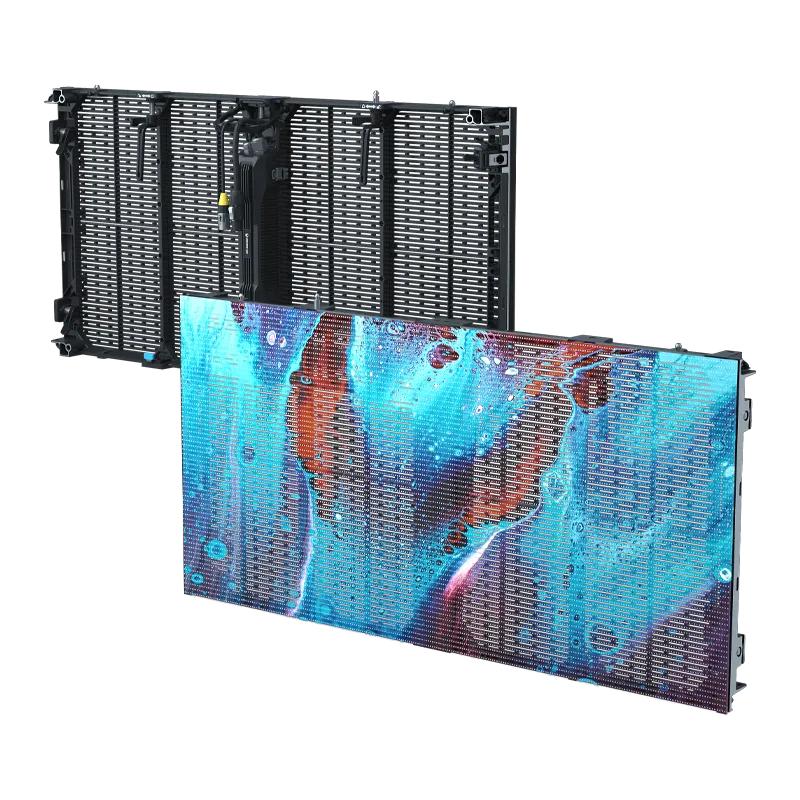
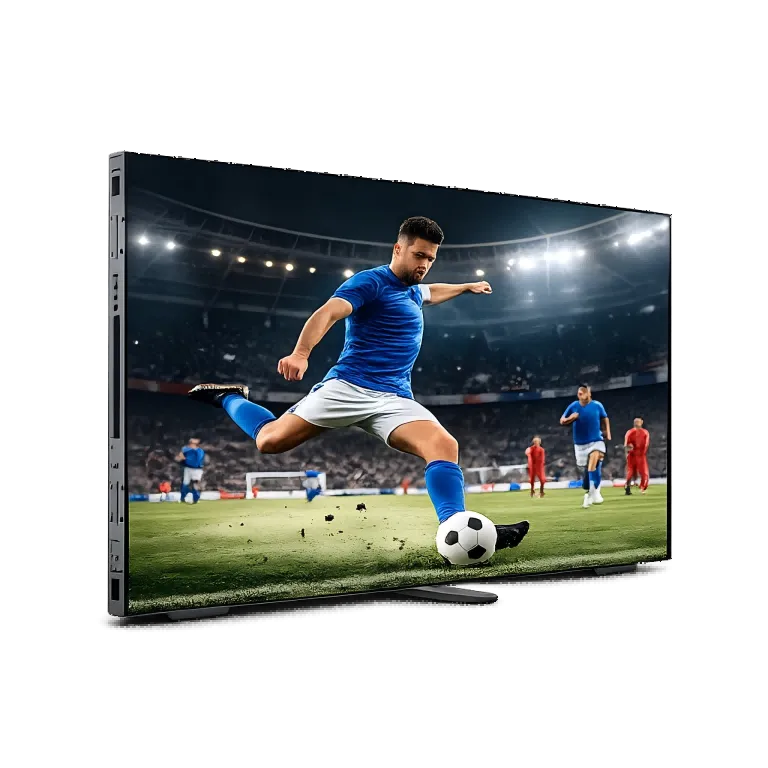
Protect the Surface
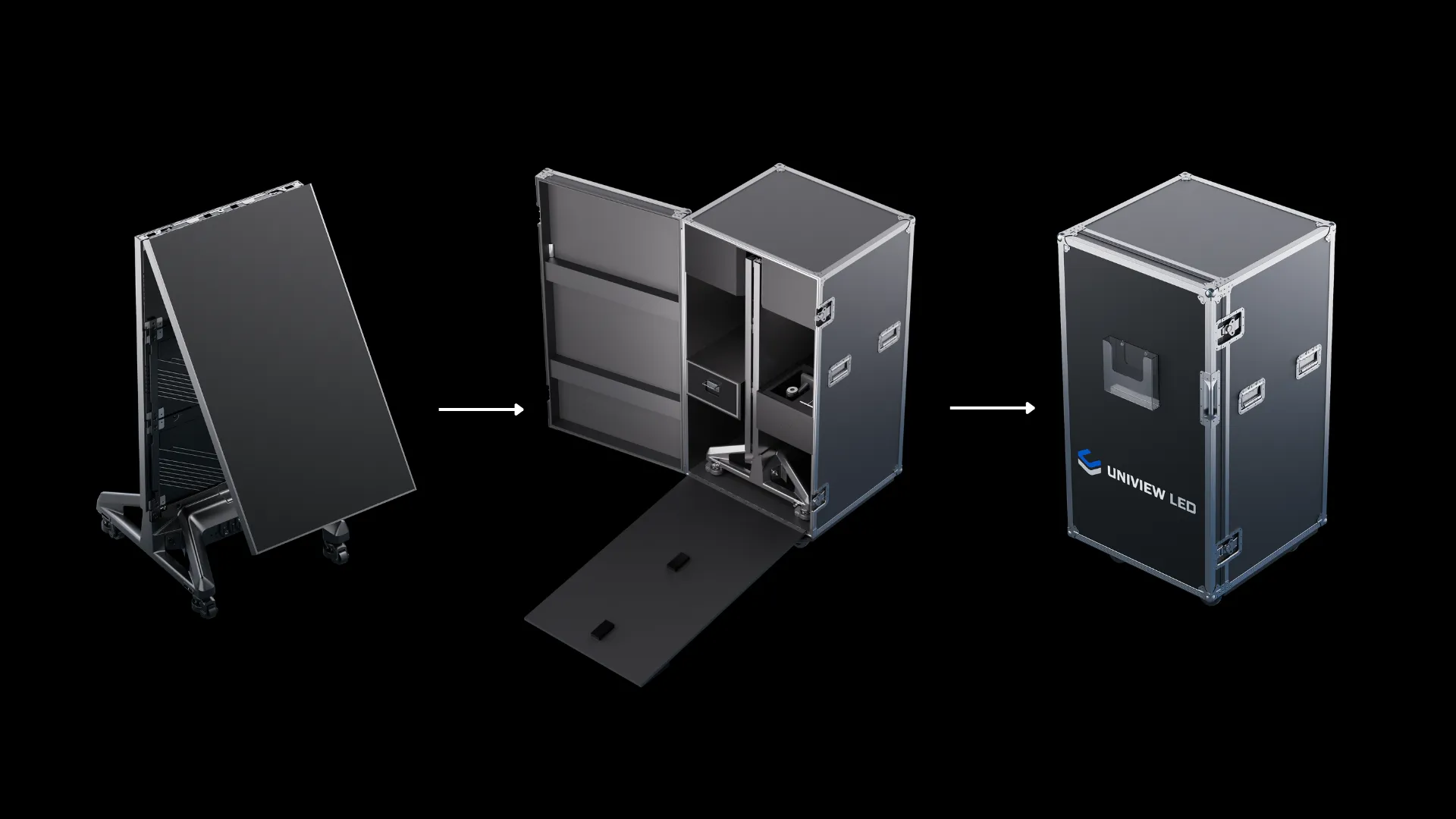
Use the dedicated flight-case workflow to reduce exposed handling during transport and storage.

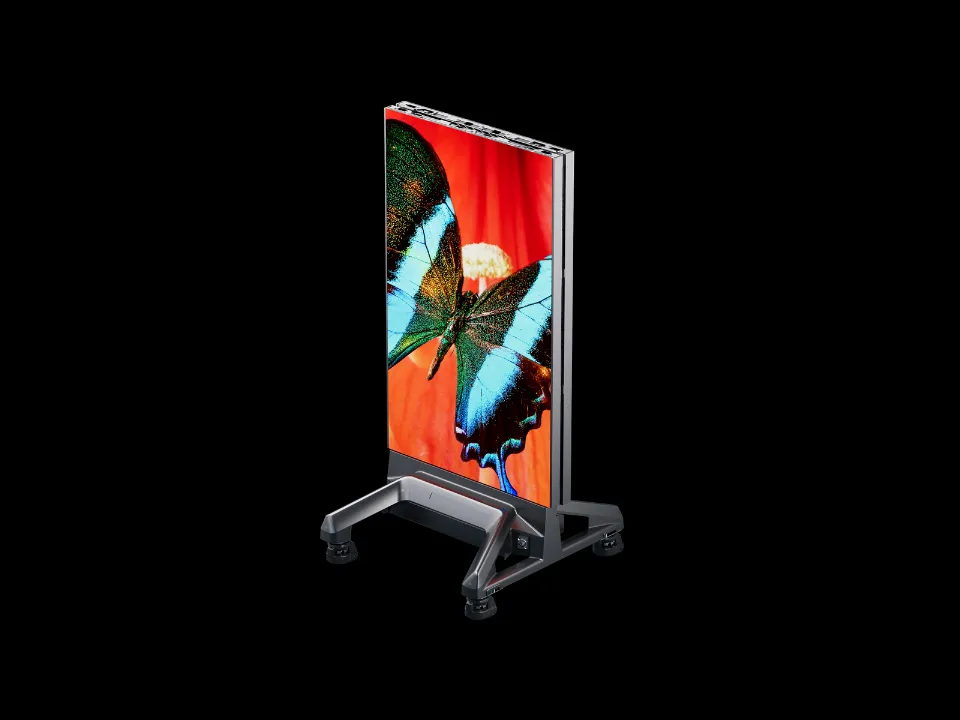
A movable P1.5625 COB LED poster designed for close-viewing indoor campaigns. The vertical display combines a wheeled base, foldable structure, front service and smart content workflows so one unit can move from storage to retail floor, exhibition booth, showroom or reception area without becoming a permanent architectural fixture.
LED Poster works as a campaign asset that moves through a repeatable commercial cycle: protect it in storage, relocate it, position it, publish new content and expand the canvas when one vertical screen is no longer enough.
Use the dedicated flight-case workflow to reduce exposed handling during transport and storage.
The wheeled base supports relocation between indoor campaign zones and event positions.
Reserve 630.59 mm base depth and keep pedestrian circulation clear around the floor-standing unit.
Smartphone and cloud workflows support scheduled campaign updates and distributed content control.
Several poster units can be mapped together when content resolution, seam alignment and signal topology are planned as one system.
The foldable structure and dedicated flight case make transport part of the product workflow. This matters for exhibitions, temporary retail campaigns and organizations that repeatedly reposition the same display inventory.
Plan local handling around one complete display unit, not only the LED surface.
Confirm lift access, ramps, loading methods and door clearances before shipment.
This product is designed as a movable indoor floor-standing poster rather than a permanent outdoor enclosure.
The poster is slim when viewed from the front, but the wheeled base defines the real floor footprint. Positioning should account for viewing distance, pedestrian routes, power access, cable routing and service access.
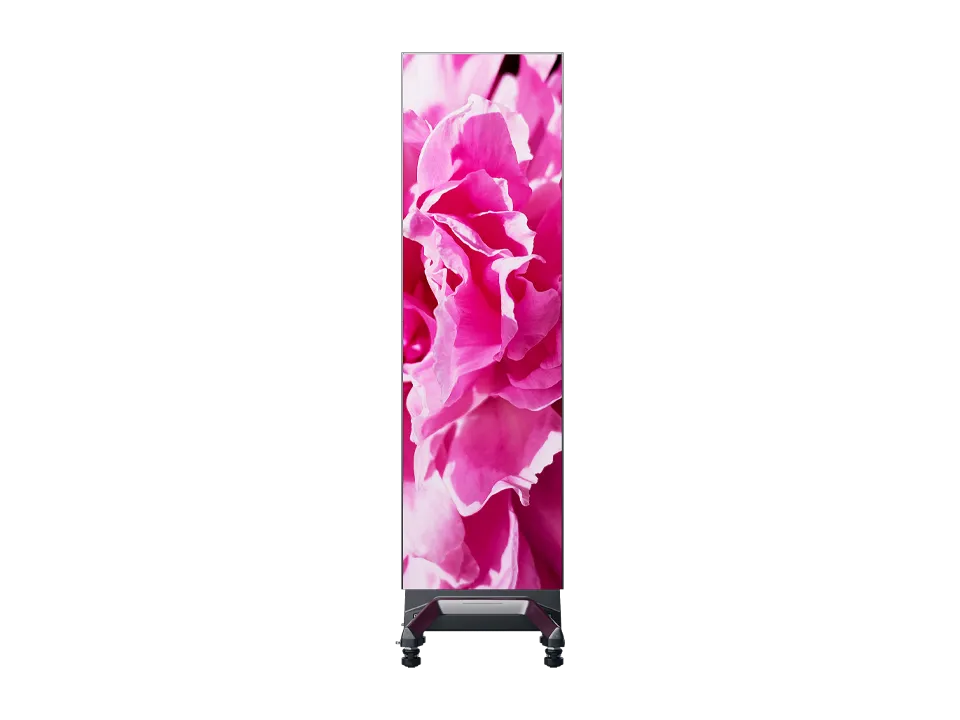
The published active display area is approximately 600 × 2025 mm, while the complete unit is larger because of the supporting frame and base.
Smartphone and cloud-based workflows can support media publishing, scheduled playback and multi-display coordination. The controller, network access, permissions and cybersecurity requirements should be frozen in the approved system configuration.
Use live or synchronized playback when the poster follows a central source or coordinated display program.
Use scheduled local playback where content is prepared and distributed for independent operation.
Define accounts, network permissions, content approval, software responsibilities and update procedures before deployment.
Side-profile planning is especially important in retail, mall and exhibition environments where the poster sits near walkways, entrances or product displays. Use the complete base dimensions—not only the visible LED face—when planning placement.
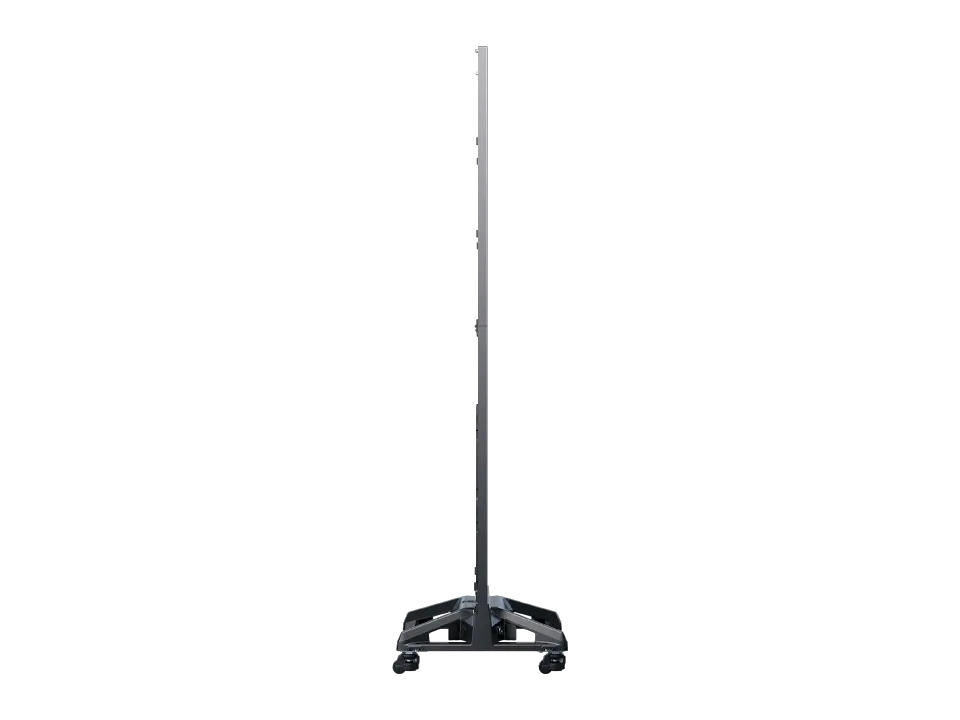
Close-viewing applications work best when the poster remains visually prominent without creating a circulation or cable-management problem.
Multi-unit layouts should be designed as a real LED canvas, not simply parked side by side. Freeze physical alignment, controller capacity, content aspect ratio, synchronization, signal topology and service access before production.
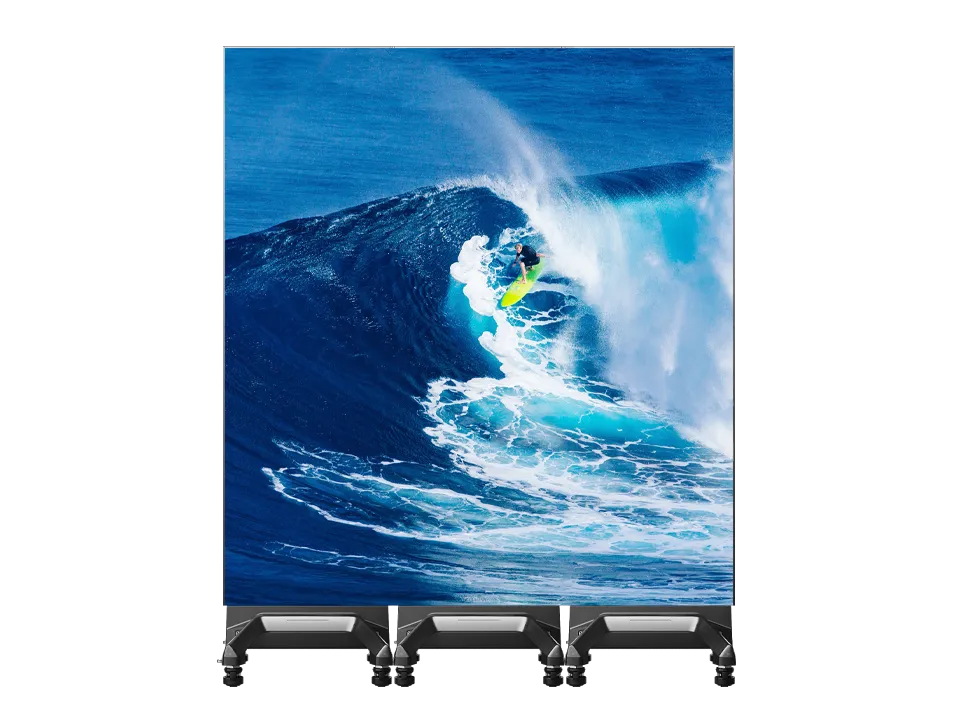
Match content resolution and mapping to the actual number of poster units in the final canvas.
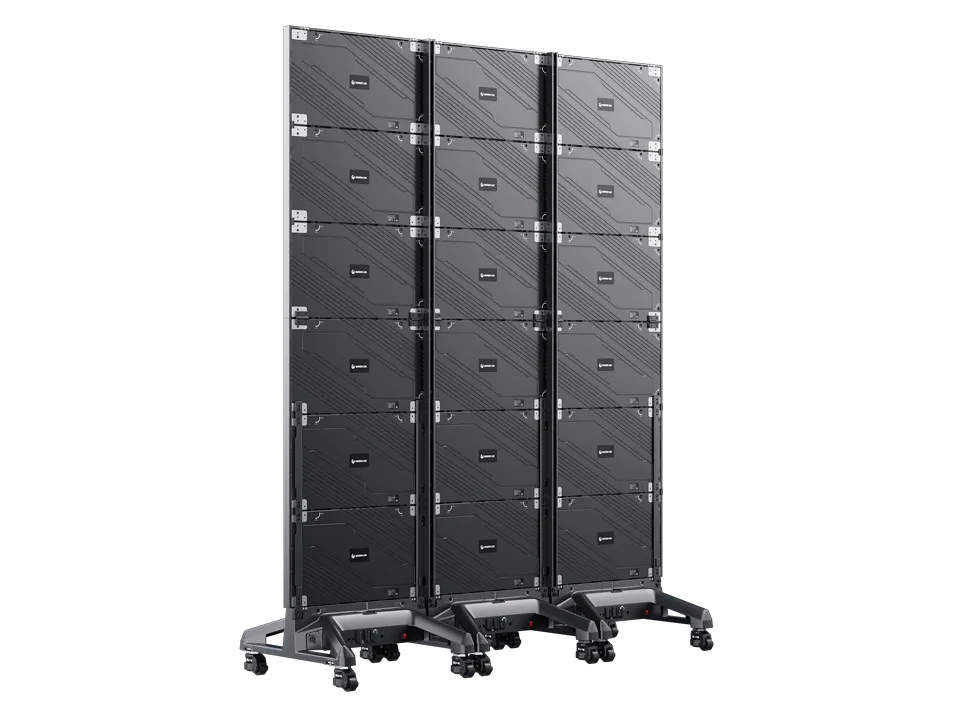
Align bases, route cables safely and retain inspection access around the rear and lower structure.
*Derived by arranging three identical 384 × 1296 pixel units side by side; final mapping depends on controller and content configuration.
The poster format is strongest in controlled indoor environments where viewers stand close, campaigns change frequently and the display may need to relocate during its operating life.
Fine text, product photography and vertical video near entrances, launch zones and premium product displays.
Movable promotion, wayfinding and tenant campaign screens that can be repositioned without permanent wall work.
Fold, transport, roll into position and update content throughout a temporary exhibition cycle.
Visitor information, campaign messaging and product storytelling in showrooms, lobbies and experience spaces.
The main table is intentionally limited to six core B2B fields. Final controller, commercial, packing and production details should follow the approved quotation and project datasheet.
| Parameter | LED Poster 1.56 COB |
|---|---|
| Pixel Pitch | 1.5625 mm |
| Brightness | 600 cd/m² after calibration |
| Refresh Rate | 3840 Hz |
| Overall Dimensions Including Base | 613.9 × 2293.74 × 630.59 mm |
| Overall Unit Weight | 49.5 kg |
| Power Consumption (Max. / Avg.) | 730 / 245 W/m² |
A mobile display still needs a fixed operating standard. Document placement, content, control and logistics so every deployment starts from the same approved configuration.
Viewing distance, floor footprint, pedestrian clearance, power point and cable route.
Native resolution, vertical creative format, scheduling, brightness and campaign approval workflow.
Synchronous or asynchronous operation, controller, network access, permissions and software responsibility.
Flight case, route access, handling method, front maintenance, spares and inspection procedure.
Six practical questions covering viewing distance, indoor brightness, multi-unit mapping, power, outdoor limits and service access.
The recommended minimum viewing distance is about 1.5 m. This suits close-viewing indoor applications such as retail stores, showrooms, exhibitions and corporate lobbies. Final placement should also consider content size, ambient light and normal eye level.
Yes, for controlled indoor lighting. The calibrated brightness is 600 cd/m². Window-facing locations or areas exposed to direct sunlight should be checked against actual ambient light before approval.
Yes. Multiple units can be mapped as a wider LED canvas. Define quantity, content aspect ratio, controller capacity, signal topology, synchronization, seam alignment and floor positioning before deployment.
Rated power consumption is 730 W/m² maximum and 245 W/m² average. Using the approximately 1.215 m² active display area, the source page derives about 887 W maximum and 298 W average per unit. Circuit design should follow the approved electrical schedule.
No. It is designed for indoor ground installation. The LED surface is listed as IP65 and the rear as IP30, but the complete unit is not an outdoor enclosure. Protect the rear, base, power and control hardware from rain, condensation and uncontrolled outdoor conditions.
Front maintenance allows LED modules to be serviced from the display face. The operating layout should still preserve safe access around the wheeled base, power input and signal connections for commissioning, inspection and cable management.