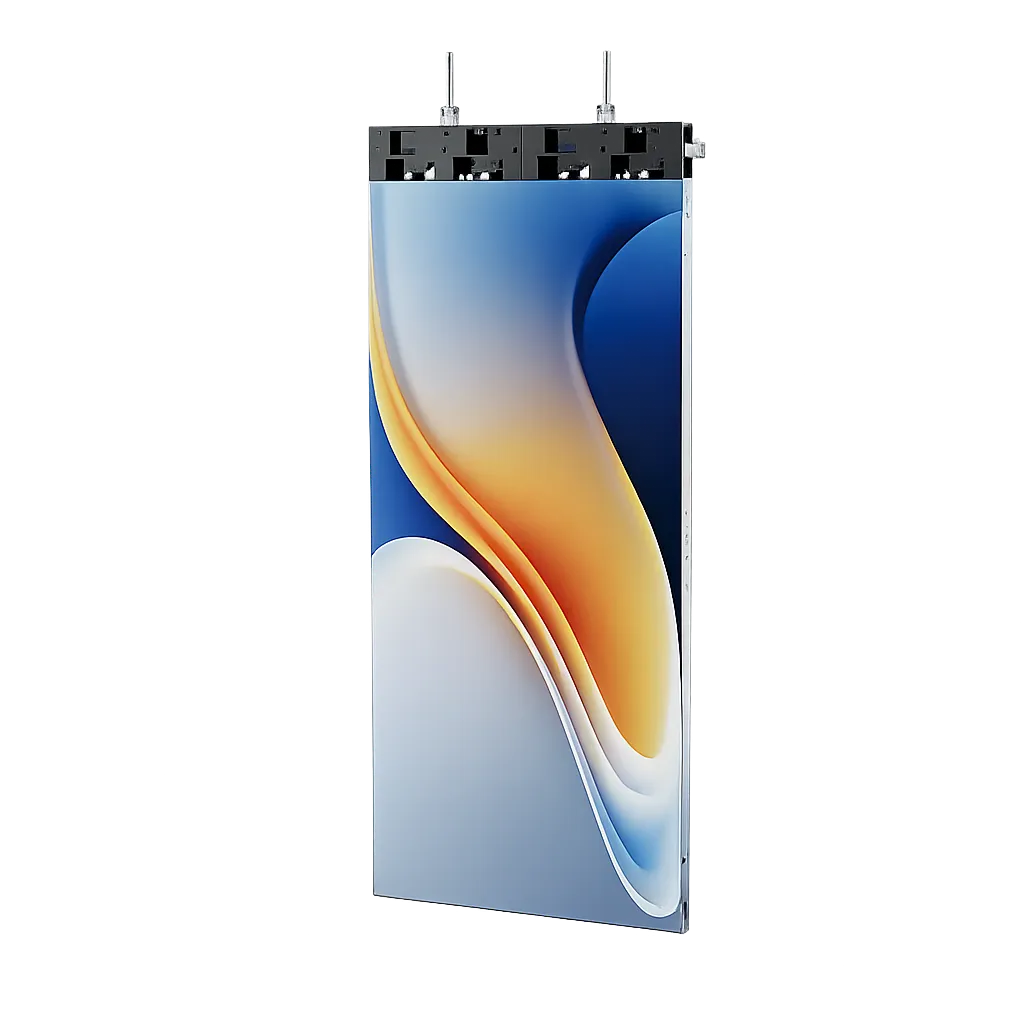
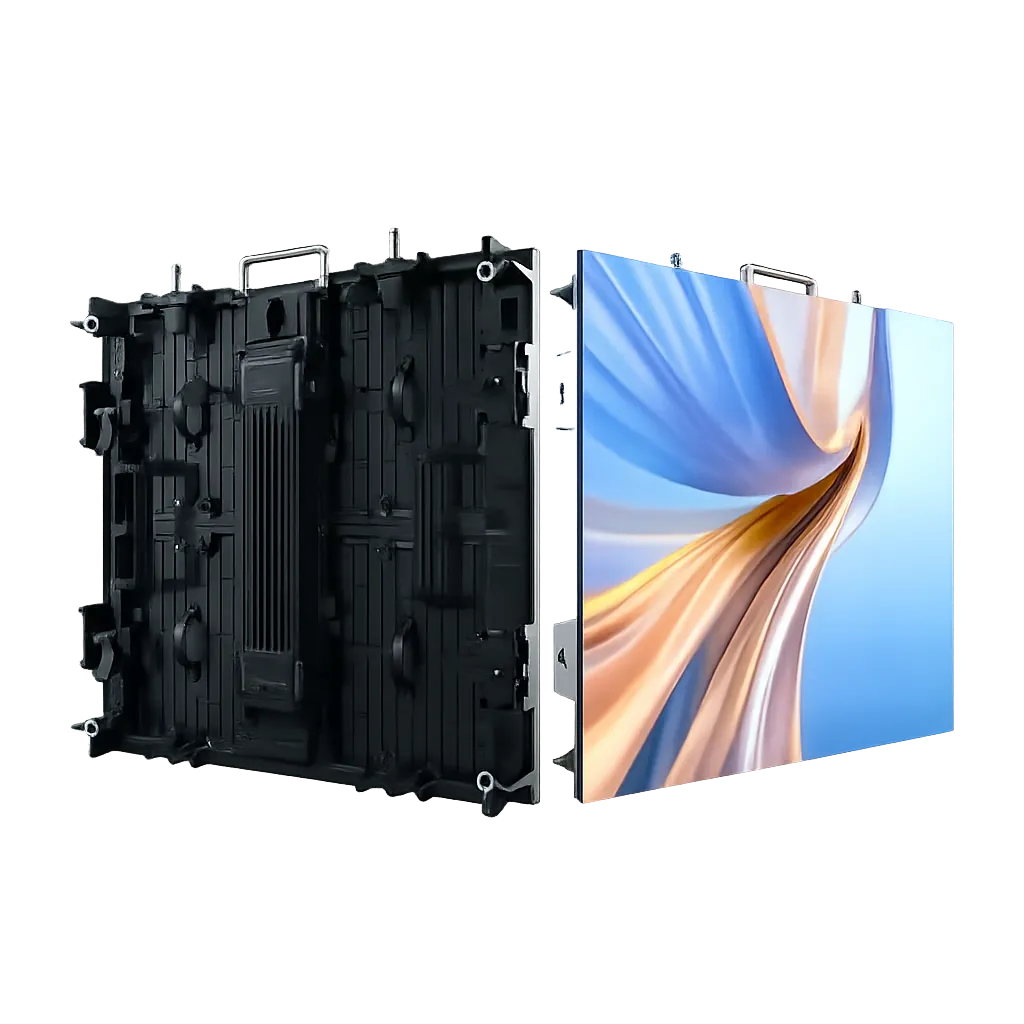
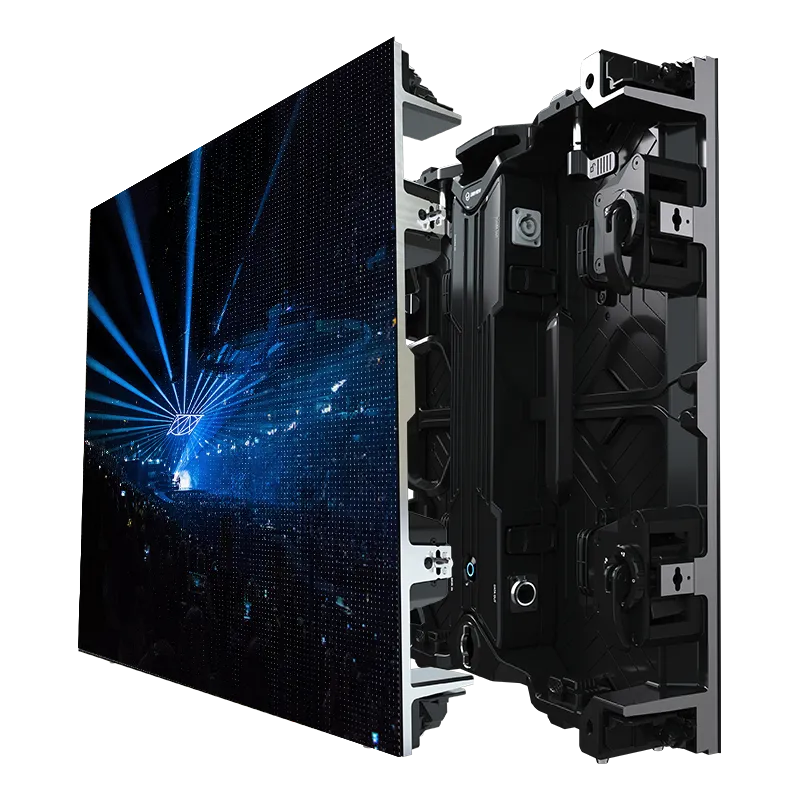
36 Cabinets
640 × 360 pixels per cabinet.

GHC is a close-view indoor fine-pitch platform built around one 600 × 337.5 mm 16:9 cabinet. The same physical format supports 0.9375, 1.25 and 1.5625 mm reference configurations, front maintenance and native 3840 × 2160 screen mapping.
The 16:9 cabinet format allows each reference pitch to reach a native 4K canvas with a clean square cabinet matrix. This turns pixel pitch selection into a measurable resolution-and-wall-size decision instead of a generic fine-pitch comparison.
One 16:9 source format, three cabinet matrices.
640 × 360 pixels per cabinet.
480 × 270 pixels per cabinet.
384 × 216 pixels per cabinet.
GHC is positioned for control rooms, studios, boardrooms and commercial interiors where the viewer is close enough to notice pixel density, cabinet alignment and calibration consistency.
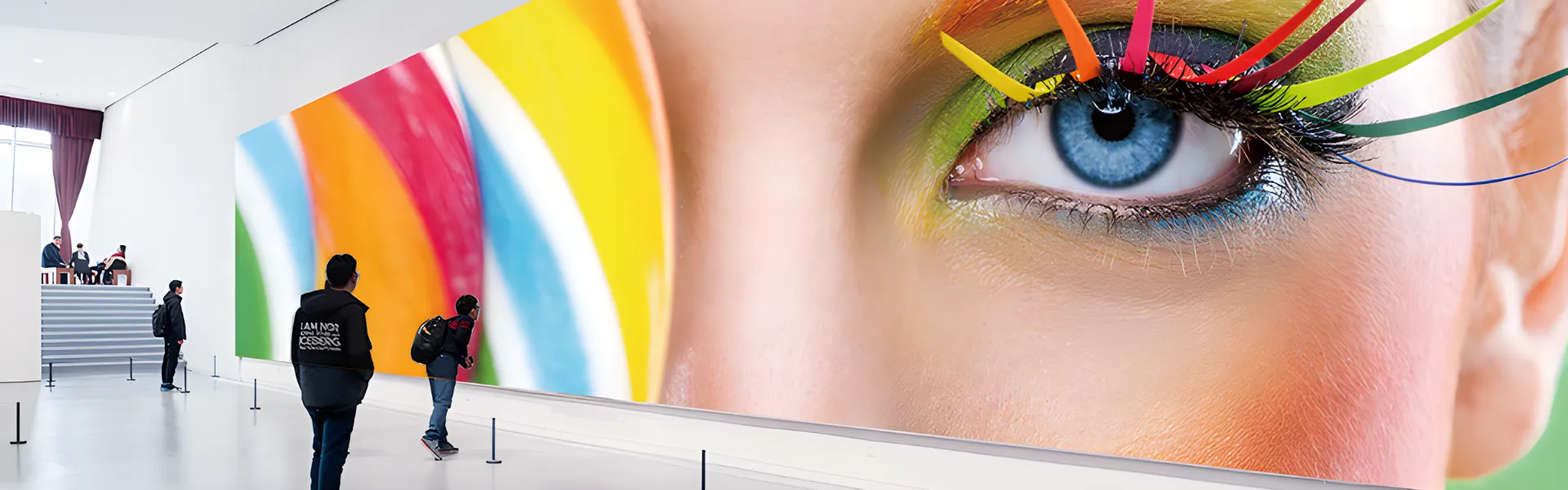
For the closest viewing and highest native pixel density of the three reference configurations.
A middle option for boardrooms, control rooms and presentation environments.
For slightly longer close-view distances while preserving the same 16:9 cabinet format.
GHC is designed for front-service fixed walls. Module removal and the internal power/data architecture should therefore be planned as one maintenance system, especially where rear access is unavailable.
Modules are removed from the viewing side so the wall can sit close to the supporting structure.
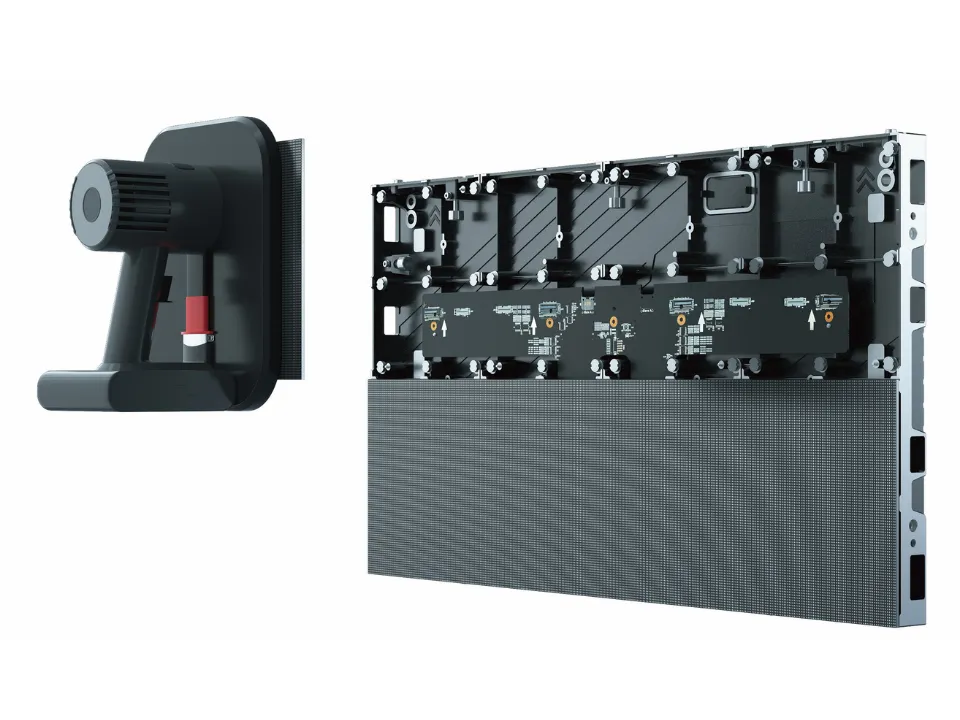
Power supplies, module interfaces and signal distribution are organized for front-side servicing and project-specific redundancy options.
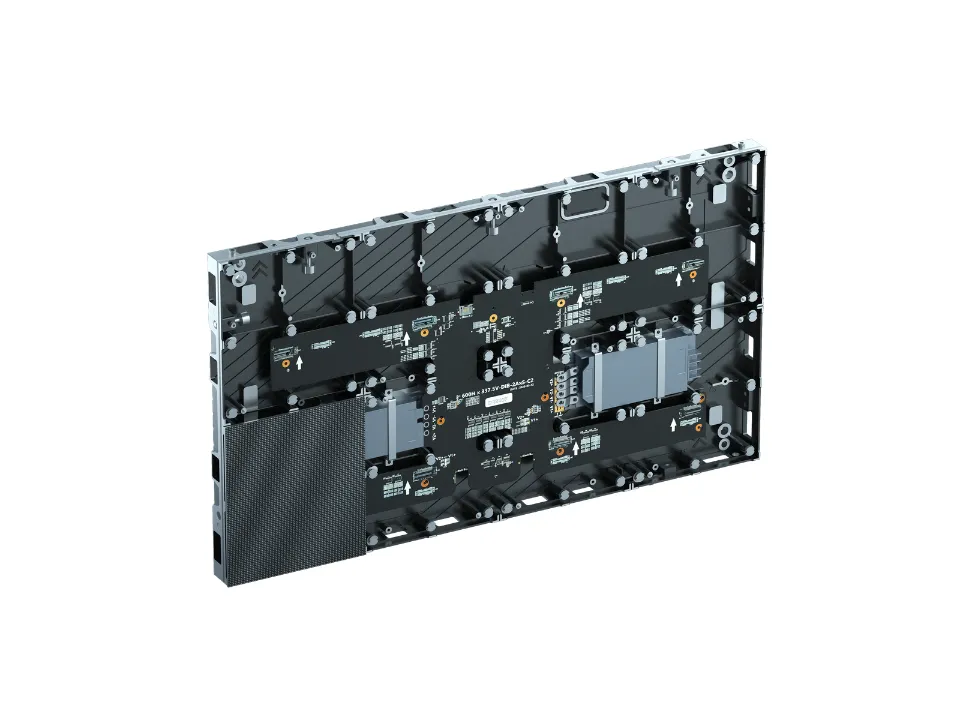
The cabinet itself is slim, but the finished wall also needs structure, cable routing, ventilation, alignment adjustment and service-tool clearance. Installation planning should therefore start before the wall opening is finalized.
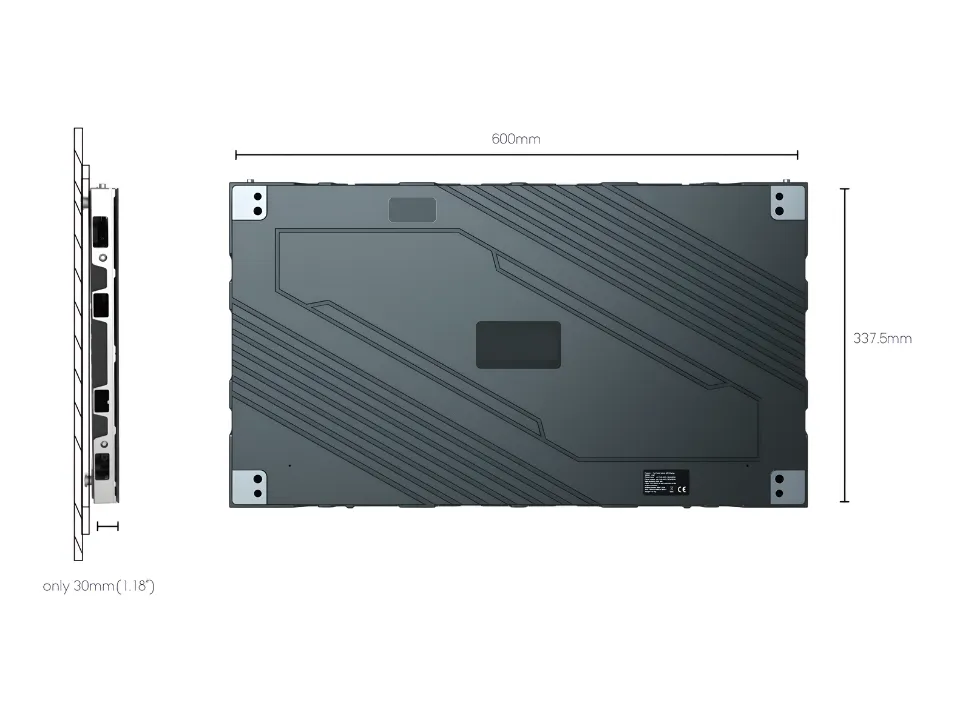
Use the installation drawing to coordinate structure, trim, cable entry and front-service access around the selected project configuration.
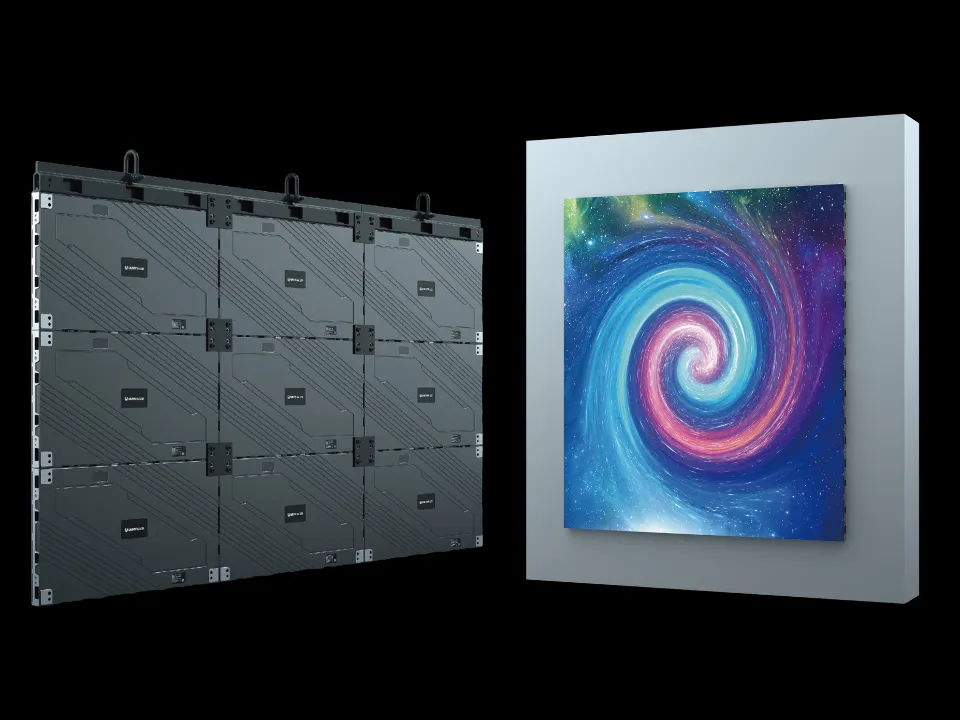
The supplied project video shows GHC used as a studio visual surface. Camera performance still depends on the selected LED configuration, calibration, receiving-card parameters and the actual production camera settings.
The 16:9 cabinet geometry is especially useful in environments that already work with standard video, presentation and broadcast canvases.
Dashboards and monitoring feeds viewed continuously from multiple operator positions.
Fine-pitch visual walls commissioned around the real production camera workflow.
Native presentation canvases for close viewing without conventional bezel lines.
Front-service visual walls integrated into showrooms, museums and commercial spaces.
The table keeps only the six fields most useful for early-stage selection and engineering review. Confirm the final COB / MIP and electrical configuration in the project quotation and released datasheet.
Swipe horizontally to compare models.
| Parameter | GHC 0.9375 MIP | GHC 1.25 COB | GHC 1.5625 COB |
|---|---|---|---|
| Pixel Pitch | 0.9375 mm | 1.25 mm | 1.5625 mm |
| Brightness | 800 cd/m² | 600 cd/m² | 600 cd/m² |
| Refresh Rate | 3,840 Hz | 3,840 Hz | 3,840 Hz |
| Cabinet Size | 600 × 337.5 × 33.6 mm | 600 × 337.5 × 33.6 mm | 600 × 337.5 × 33.6 mm |
| Cabinet Weight | 4.2 kg | 4.2 kg | 4.2 kg |
| Power Consumption | 540 / 200 W/m² | 295 / 98 W/cabinet | 285 / 95 W/cabinet |
A fine-pitch wall should not move to production until native resolution, cabinet matrix, structure, power/data topology and front-service workflow are coordinated together.
Active dimensions, source format, native resolution and cabinet matrix.
Opening size, leveling, Z-axis tolerance, cable paths and total installed load.
Receiving-card topology, redundancy options and circuit planning.
Brightness, grayscale, calibration and camera approval for the selected configuration.
Six practical questions covering viewing distance, native 4K mapping, broadcast use, front maintenance, wall load and installation method.
Use GHC 0.9375 for about 1.0 m, GHC 1.25 from about 1.2 m, and GHC 1.5625 from about 1.5 m. Confirm the closest regular viewer, content detail, camera use, ambient light and final screen dimensions before selecting the pitch.
A native 3840 × 2160 wall uses 36 GHC 0.9375 cabinets in a 6 × 6 matrix, 64 GHC 1.25 cabinets in an 8 × 8 matrix, or 100 GHC 1.5625 cabinets in a 10 × 10 matrix. Confirm controller capacity, active dimensions and structural opening before finalizing the matrix.
3840 Hz is a practical baseline for many studio applications, but it does not guarantee a band-free camera image by itself. Test the selected configuration with the actual shutter, frame rate, exposure, scan settings, brightness and receiving-card parameters.
Yes. The selected GHC configurations support front maintenance, allowing modules and service components to be accessed from the display face. The installer still needs to reserve space for the frame, cable routing, ventilation, alignment and safe tool access.
Each 600 × 337.5 mm cabinet weighs 4.2 kg, or about 20.7 kg/m² for cabinets only. Add the supporting frame, cabling, power distribution, trim and service allowance to the structural calculation.
GHC is primarily a fixed indoor display, and the product material shows both wall-mounted and hanging arrangements. Suspended installation must use the specified hanging hardware and project-specific structural and rigging approval.