+86 755 33581900

GT Series · Indoor Fixed Installation

Ultra-Slim Indoor LED Display

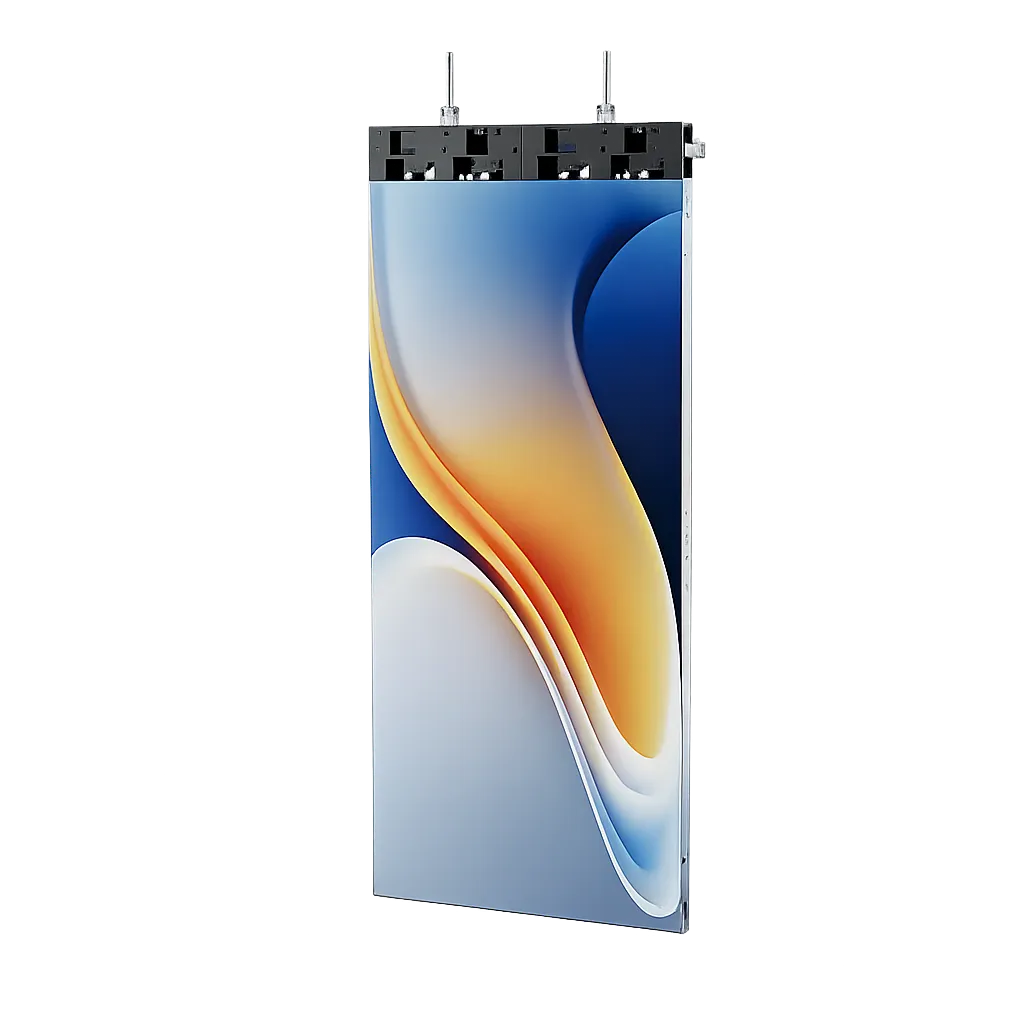
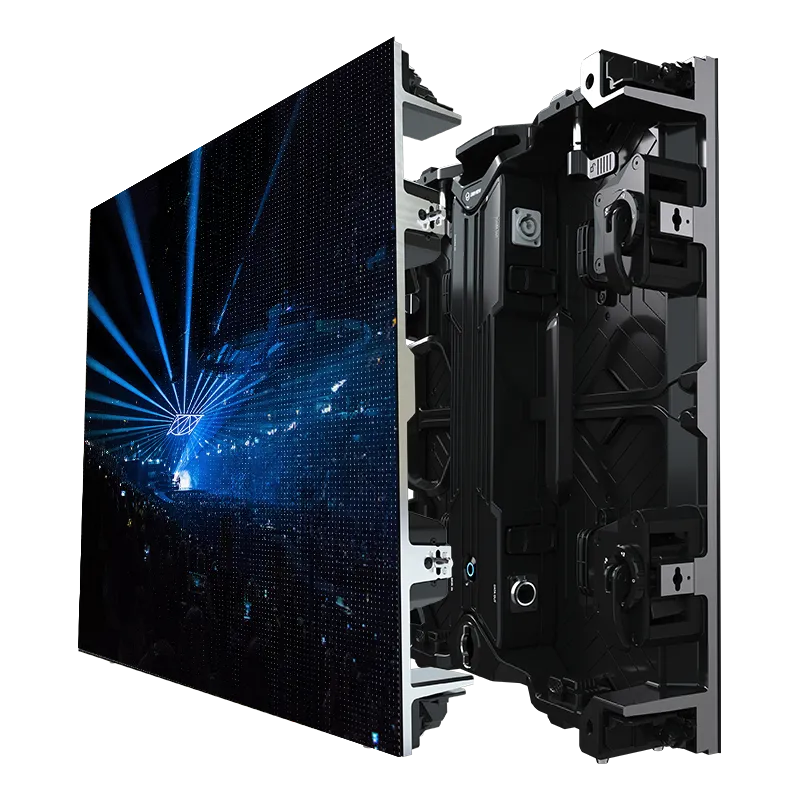
GT Series is a 47 mm-deep, die-cast aluminum indoor LED display platform for retail, corporate, transportation and commercial interior projects. Eight verified configurations cover 1.562–3.906 mm pixel pitches, 600–3000 cd/m² brightness, 3840/7680 Hz refresh rates and front or rear service access.

1.562–3.906 mmVerified pixel-pitch range
600–3000 cd/m²Standard and high-brightness options
3840 / 7680 HzModel-dependent refresh rate
47 mmCabinet depth
5.5 / 11 kg500 × 500 / 500 × 1000 cabinets

Product Overview

A Configurable Platform for Indoor Commercial LED Walls

GT combines a 250 × 250 mm module, two cabinet heights and a hard-connected module-to-cabinet architecture. The standard models address controlled indoor viewing, while GT HB 2.6, GT HB 2.9 and GT HB 3.9 provide 3000 cd/m² output for protected, high-ambient-light storefront locations.

Standard indoor rangeGT 1.5, 1.9, 2.6, 3.1 and 3.9 at 600–800 cd/m².
High-brightness rangeGT HB 2.6, HB 2.9 and HB 3.9 at 3000 cd/m²; all remain IP30 indoor products.
Service accessFront and rear maintenance are listed across all supplied parameter sheets.
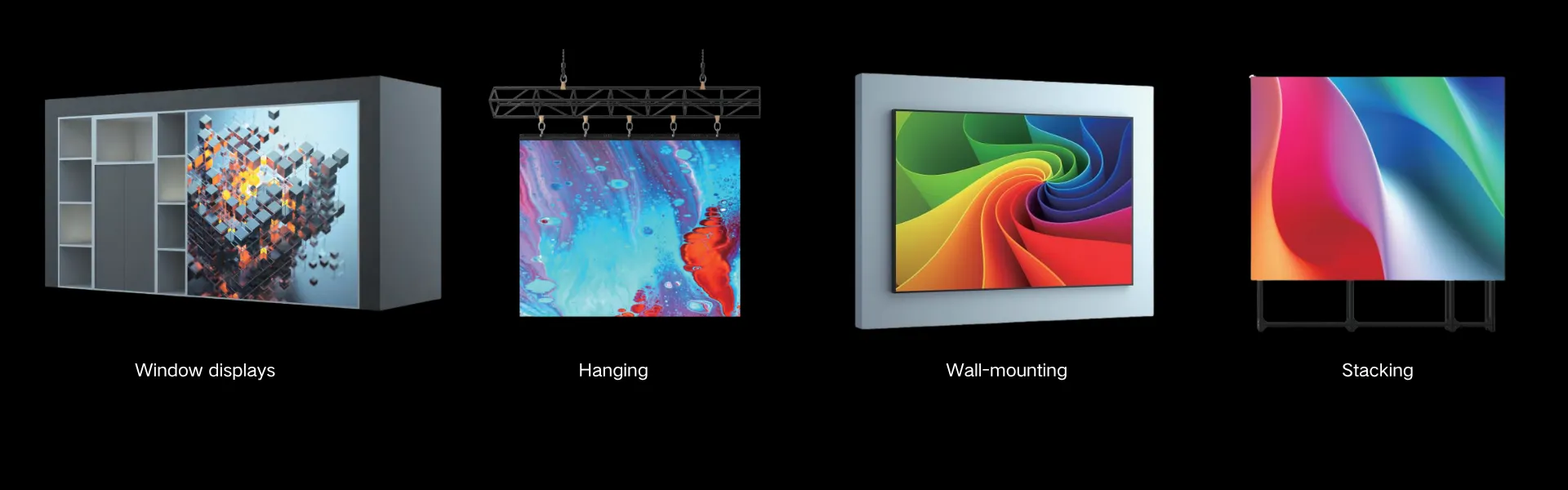
Fixed installationWall, structure or protected storefront integration should be engineered per project.
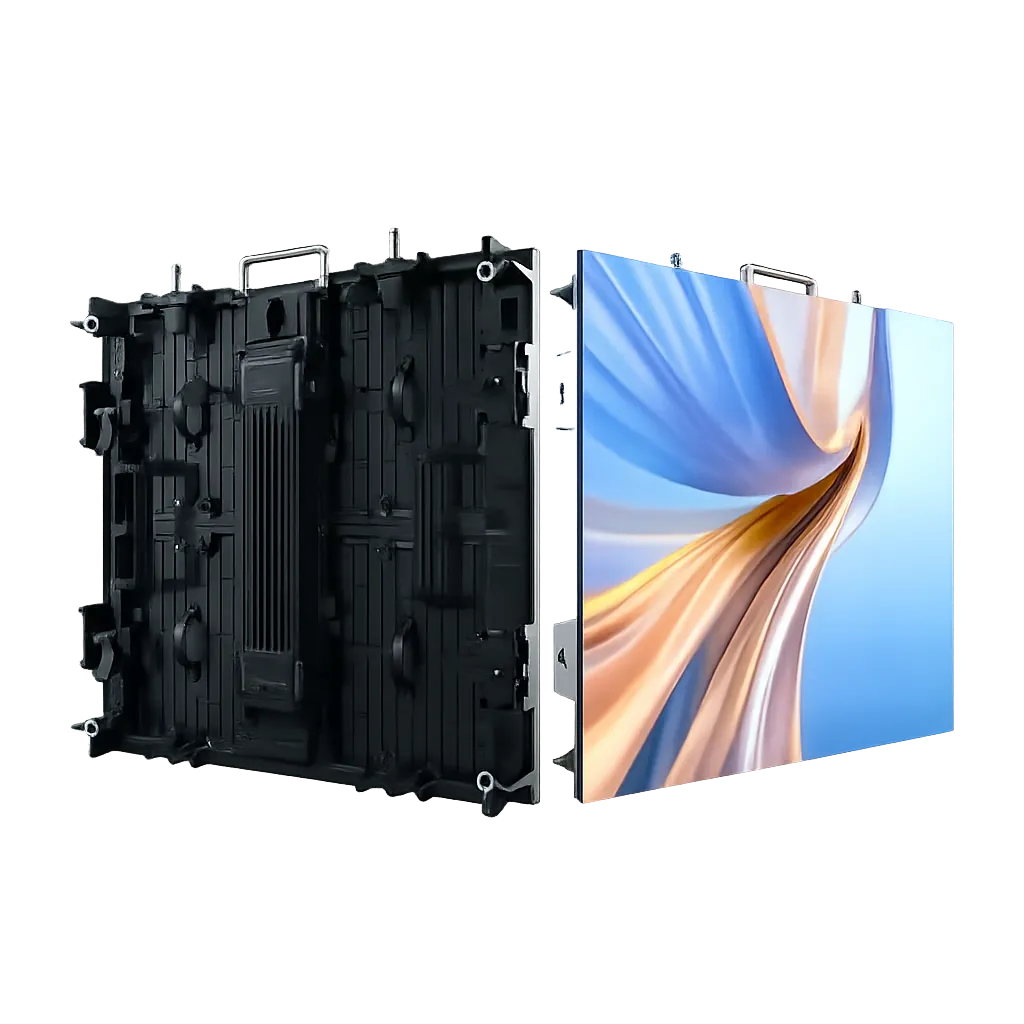
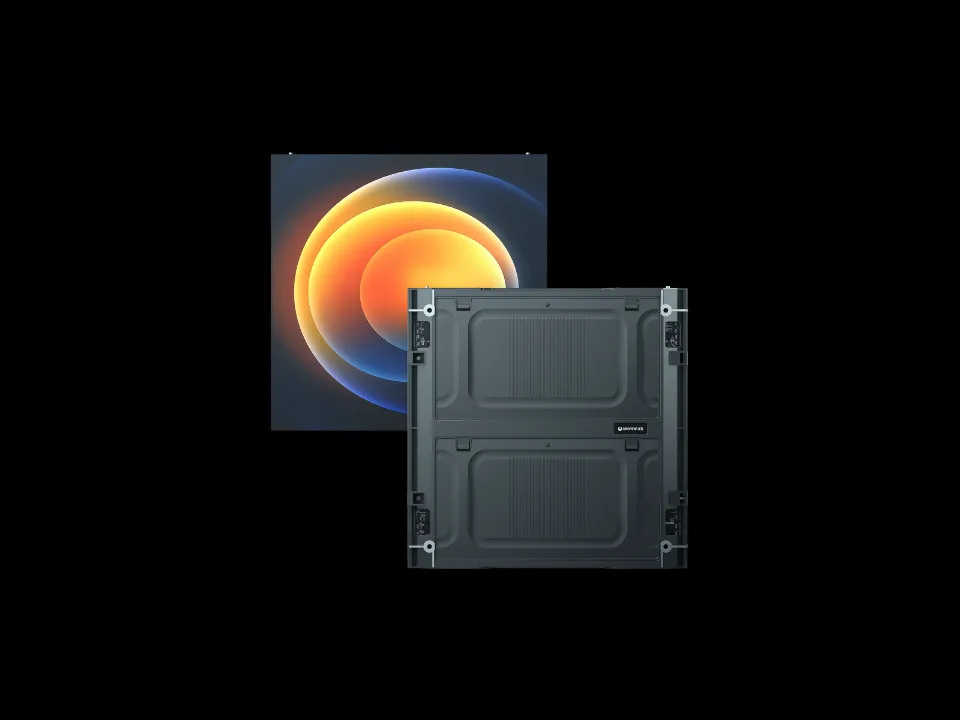
GT Series slim indoor LED display cabinet and screen configuration
GT Series · Indoor Fixed LED Display

Core Technical Advantages

Serviceable Structure, Controlled Visual Performance

Each feature below is tied to the supplied product material or verified parameters. Project-specific limits are stated where the datasheets do not provide a universal value.

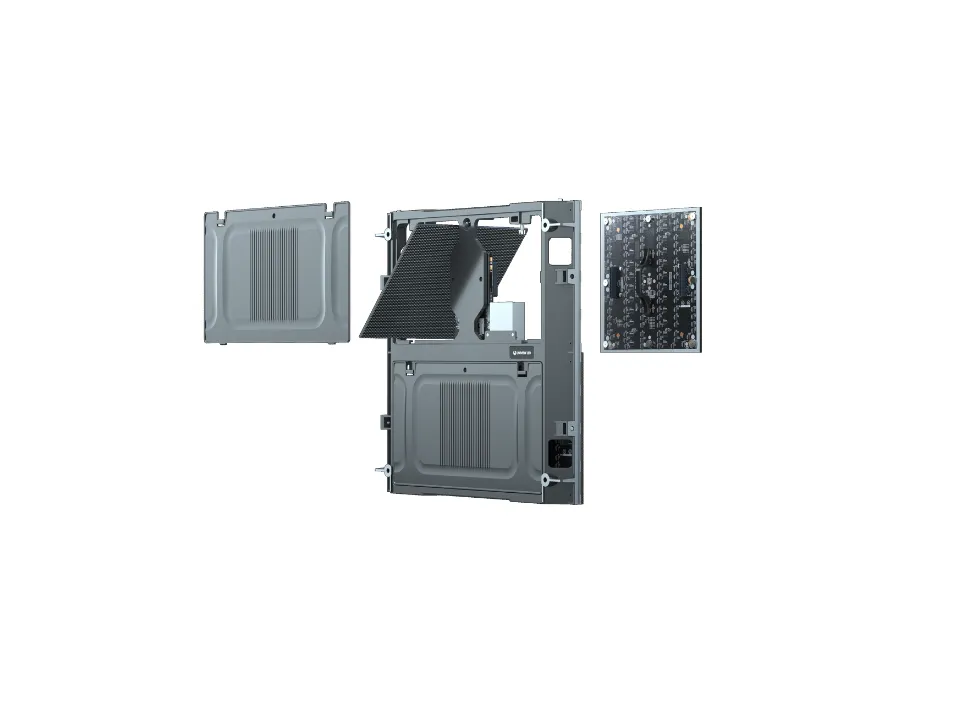
GT Series cabinet opened for front and rear service access

Maintenance Access

Front and Rear Service

The module, HUB and power supply are described as serviceable from the front or rear. This supports shallow wall integration and conventional rear-access structures, but cable bend radius, ventilation and safe extraction space must still be reviewed during structure design.
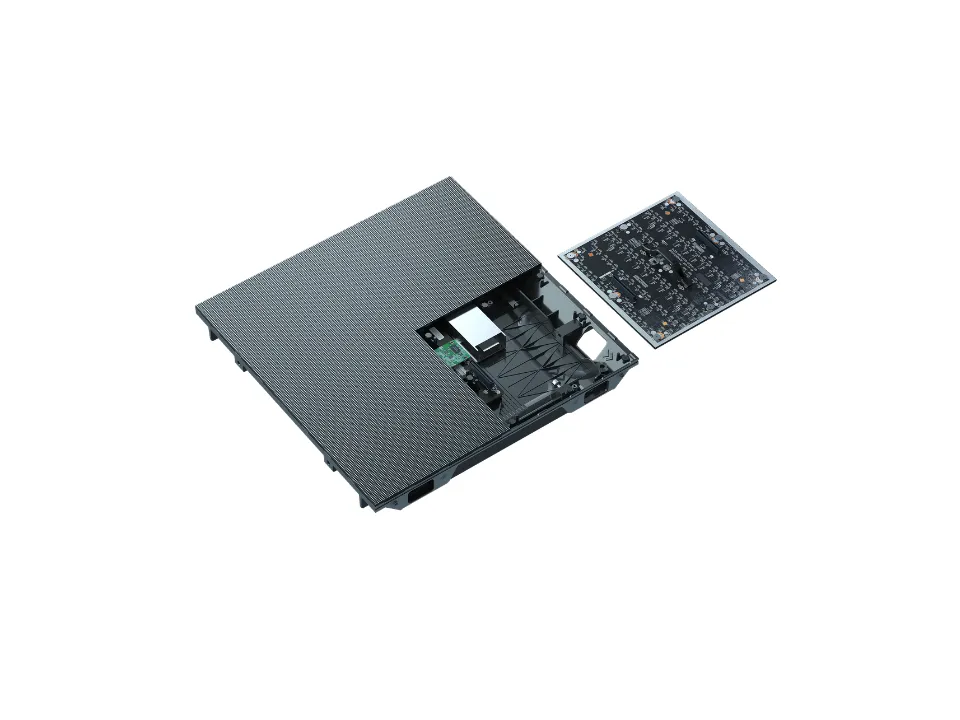
GT Series hard-connected HUB and module interface

Power and Data Distribution

Hard-Connected HUB Architecture

A direct module-to-cabinet connection reduces internal jumper connections and simplifies replacement paths. Final receiving-card quantity, signal topology and power distribution should be mapped against the native resolution and cabinet count before production.

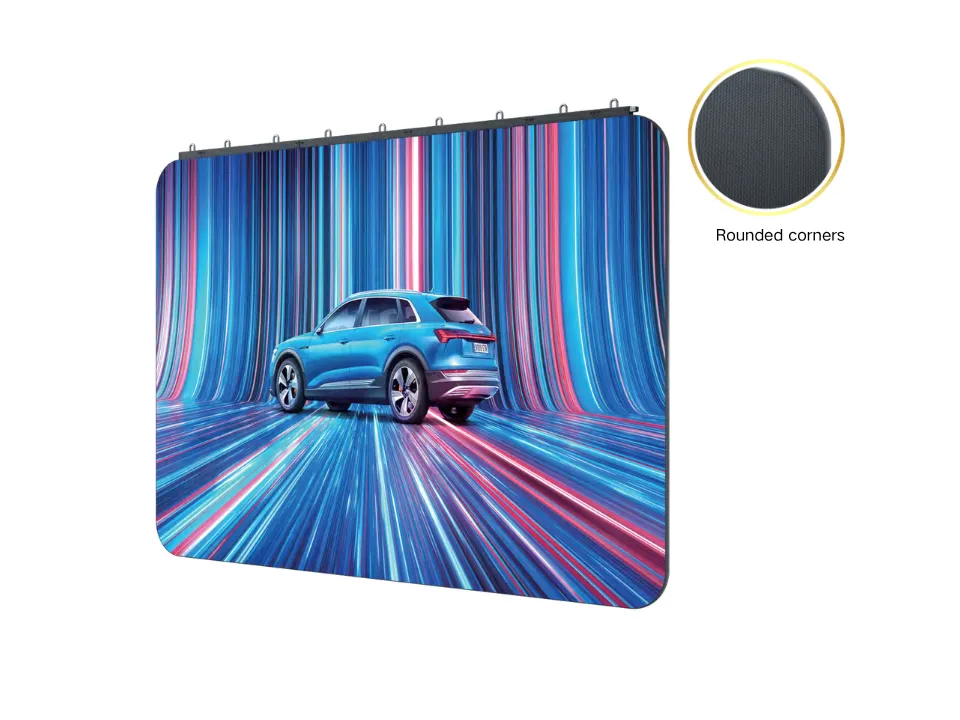
GT Series optional rounded-corner cabinet configuration

Edge Configuration

Optional Rounded Corners

The original product material identifies rounded-corner options for GT 1.9 and GT 2.6. Availability, minimum radius, cabinet orientation, module layout and edge protection should be confirmed before the mechanical design is frozen.

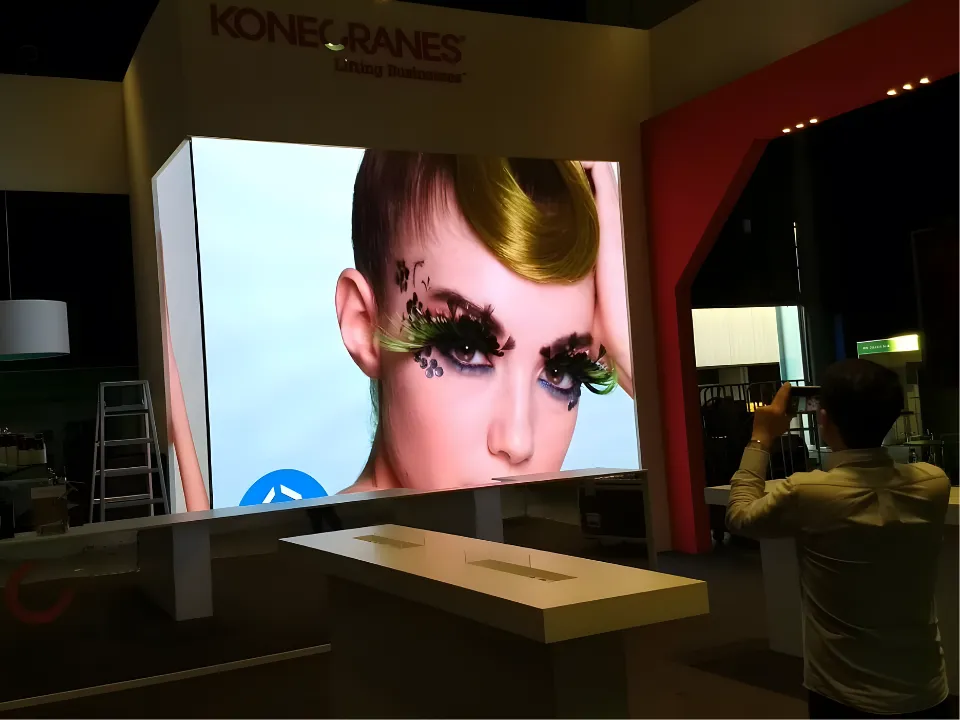
GT Series indoor LED display showing high-refresh visual content

Image Performance

3840 / 7680 Hz Refresh

GT 1.5 is specified at 3840 Hz, while the other verified models are specified at 7680 Hz with 15-bit grayscale. For camera-facing projects, the final result also depends on scan mode, driver settings, shutter speed, frame rate and calibration quality.

Engineering Review

Details That Affect Installation Quality

A consistent LED wall depends on more than cabinet specifications. The supporting structure, cabinet mapping, power distribution and commissioning plan should be reviewed as one system.

01

Cabinet Flatness

The supplied sheets list screen flatness at ≤1 mm. Structure tolerance, cabinet leveling and Z-axis alignment must still be controlled across the complete wall.

02

Module Alignment

Module seating and seam consistency should be checked after installation and after any service replacement, especially on close-viewing P1.562 and P1.953 walls.

03

Signal Topology

Receiving-card loading and data routing should be based on native cabinet resolution. Signal redundancy is not listed as standard and must be specified when required.

04

Calibration Data

Keep cabinet and module calibration data with the project handover package so replacement components can be matched during long-term fixed installation service.

Applications

Designed for Commercial Interior Projects

Select the model by closest viewing distance, ambient light, camera use, active dimensions and maintenance constraints rather than by application name alone.

GT Series indoor LED display applications in commercial environments

Luxury Retail

Close viewing and brand content benefit from fine pixel pitches, controlled brightness and careful seam consistency.

Shopping Malls

Large-format wayfinding and advertising walls require predictable service access and long-term fixed-installation planning.

Airports and Hubs

High-traffic interiors need readable content, stable operation and an access strategy that minimizes disruption.

Corporate Lobbies

Architectural integration depends on cabinet depth, trim detail, native resolution and clean front-service access.

Broadcast Studios

Camera-facing walls should prioritize 7680 Hz models and be tested with the intended cameras, shutter settings and content.

Shop Windows

GT HB models support brighter protected storefront locations, but IP30 requires full protection from rain and outdoor exposure.

Project Video

Sweden Shop-Window Installation

Protected Storefront Application

The original project video is shown without overlays, gradients, filters or text on the moving image. The video loads only when it approaches the viewport.

Cabinet Dimensions

Two Cabinet Heights, One 47 mm Depth

Both cabinet sizes use the same 250 × 250 mm module platform. Mixed-size mapping can reduce structure joints, but cabinet orientation, lock positions, power and data ports must be confirmed before using the 500 × 1000 mm panel in a landscape orientation.

500 × 500 × 47 mm

47 mm depth
5.5 kgCabinet weight
2 × 2250 × 250 mm modules

500 × 1000 × 47 mm

47 mm depth
11 kgCabinet weight
2 × 4250 × 250 mm modules

Installation limitation: the supplied sheets list 500 × 1000 mm, not a separate 1000 × 500 mm cabinet. Do not assume horizontal rotation until mechanical locks, module orientation, ports and service access have been approved.

Core Specifications

Verified GT Model Comparison

Six core buyer and engineering parameters are shown across all eight verified GT models: pixel pitch, brightness, refresh rate, cabinet size, cabinet weight and power consumption. Confirm the final approved technical sheet before ordering.

Swipe horizontally to compare models.

Parameter GT 1.5 GT 1.9 GT 2.6 GT HB 2.6 GT HB 2.9 GT 3.1 GT 3.9 GT HB 3.9
Pixel Pitch 1.562 1.953 2.604 2.976 3.125 3.906
Brightness 600 cd/m² 800 cd/m² 3000 cd/m² 800 cd/m² 3000 cd/m²
Refresh Rate 3840 Hz 7680 Hz
Cabinet Size (W × H × D) 500 × 500 × 47 / 500 × 1000 × 47 mm
Cabinet Weight 5.5 / 11 kg
Power Consumption (Max / Avg) 450 / 150 W/m²

Project Support

From Cabinet Mapping to Commissioning

For B2B projects, the product selection should be documented together with active dimensions, resolution, structure, power, data routing and service strategy.

Pixel-Pitch Selection

Review closest viewing distance, content detail, screen dimensions and budget before choosing the model.

Cabinet Mapping

Calculate native resolution, controller loading, cabinet counts and the final aspect ratio before production.

Power and Data Plan

Define maximum load, branch circuits, receiving-card layout, cable routes and any required redundancy.

Commissioning Package

Prepare calibration data, spare-parts scope, test content and service documentation for handover.

Buyer FAQ

GT Indoor LED Wall FAQ

Six common buyer questions covering pixel pitch, indoor brightness, camera performance, project cost, front maintenance and protected shop-window applications.

01 How do I choose the right pixel pitch for an indoor LED wall?

Choose pixel pitch from the closest regular viewing distance, screen dimensions, content detail and target resolution. GT 1.5 and GT 1.9 are the natural starting points for closer viewing, while GT 2.6–3.9 models suit progressively longer viewing distances and larger display areas. The final selection should also consider content type and budget.

02 Do I need 600, 800 or 3000 nits for an indoor LED display?

Use 600–800 cd/m² for controlled indoor spaces and consider the 3000 cd/m² GT HB models only for bright, protected storefront locations. Brightness should be selected from the real ambient-light condition, nearby glazing and direct-sun exposure. The GT HB models remain IP30 products and are not outdoor weatherproof displays.

03 Is 7680 Hz refresh rate better for cameras and video?

Choose a 7680 Hz GT model when the screen will be photographed or recorded frequently. GT 1.9 through GT HB 3.9 are listed at 7680 Hz, while GT 1.5 is listed at 3840 Hz. Camera results also depend on scan mode, shutter speed, frame rate, brightness and calibration, so the intended camera workflow should be tested before acceptance.

04 How much does an indoor LED video wall cost?

There is no reliable single price because total project cost changes with pixel pitch, screen area, cabinet count, control system, structure, power distribution, installation, freight and technical support. Finer pixel pitches generally increase pixel density and hardware cost. For an accurate GT quotation, provide the active screen dimensions, nearest viewing distance, project country, installation method and target resolution.

05 Can the GT Series be fully front-maintained without a rear service corridor?

Yes. The supplied GT specifications list front and rear maintenance, and the product material states that the module, HUB and power supply can be serviced from either side. Front service can reduce the need for a full rear corridor, but the structure still needs module-removal clearance, cable bend radius, ventilation, isolation access and safe technician working space.

06 Can a 3000-nit GT HB screen be used outdoors or in a shop window?

GT HB is suitable for bright, protected shop-window or high-ambient-light indoor locations, but it should not be treated as an outdoor weatherproof LED display. The supplied GT HB models are rated IP30 front and rear, so rain, condensation, wind-driven dust and direct environmental exposure must be prevented. Use an outdoor-rated product for exposed façades or billboards.

Prepare these three details for quotation

Active display width and height · closest viewing distance and ambient-light condition · required input resolution, camera use and service-access limitation.

Request a free quote

We shall provide you with a detailed quotation within 24 hours of receiving your enquiry.

Recommended products

GET A QUOTE

We will get back to you as soon as possible.