Viewing Distance
Use the nearest regular viewer position and content detail to select pixel pitch.

Precision Outdoor LED Display
Four outdoor pixel pitches from 1.953 to 3.906 mm combine close-range resolution, 3,000–4,500-nit model-specific brightness, 7,680 Hz refresh and front/rear service. Select the model from viewing distance, solar exposure, active dimensions and cabinet format.
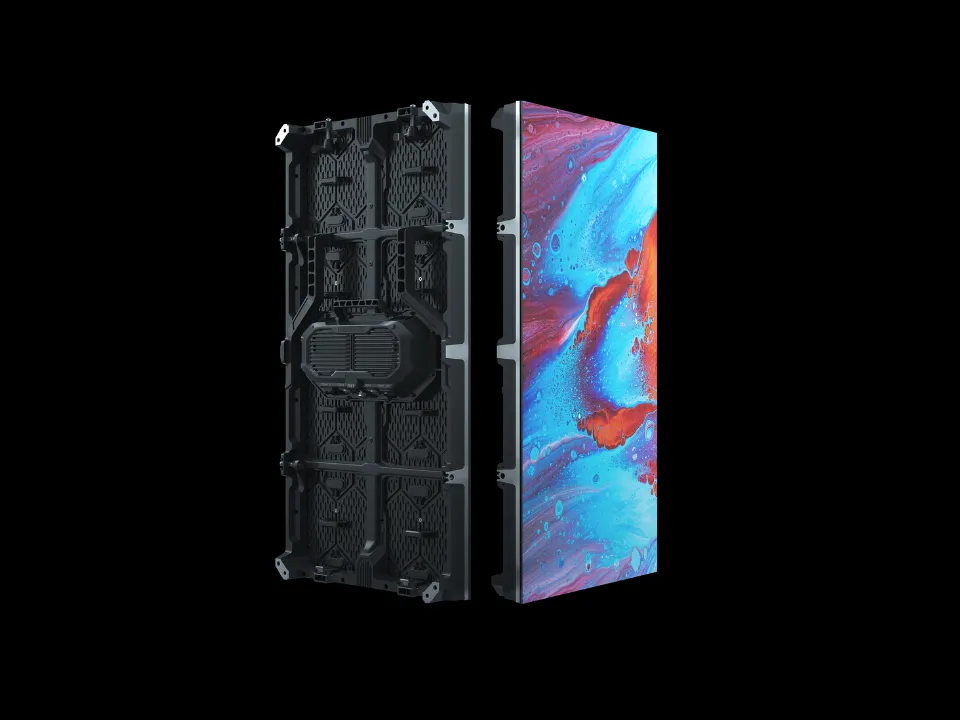
Selection Logic
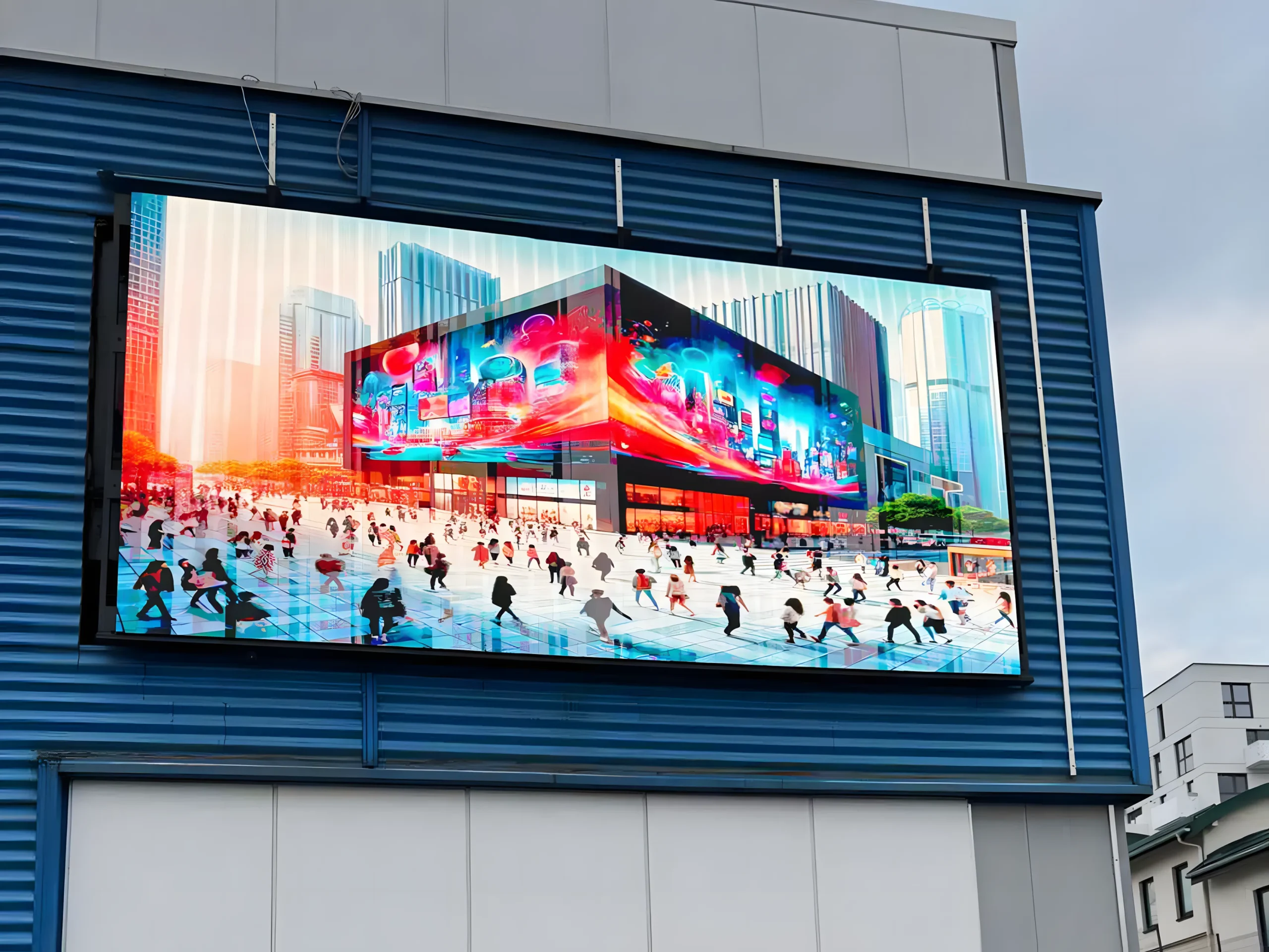
Falcon is not a single-brightness, single-format platform. The four models split into two brightness levels and two cabinet formats, so model selection should begin with the real viewing and exposure conditions.
Use the nearest regular viewer position and content detail to select pixel pitch.
3,000-nit models suit more controlled or shaded conditions; 4,500-nit models provide more daylight margin.
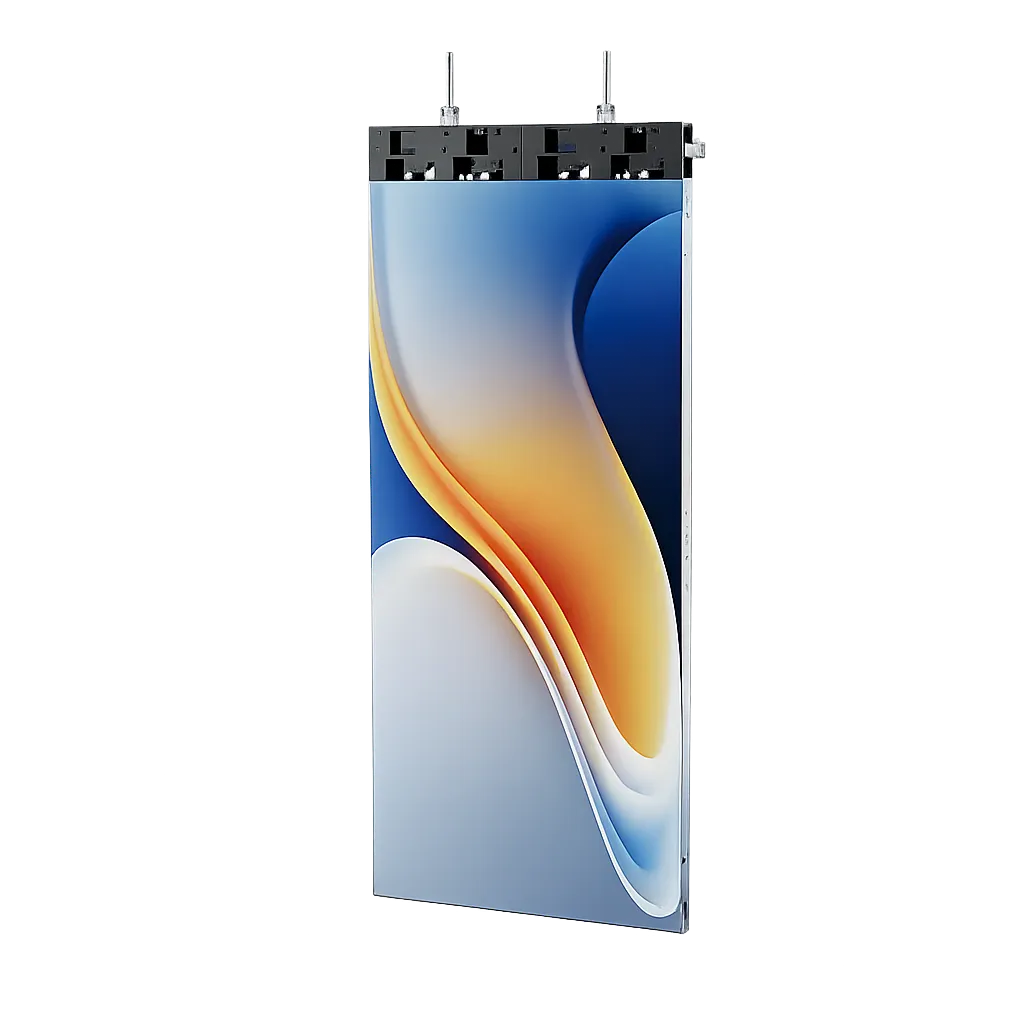
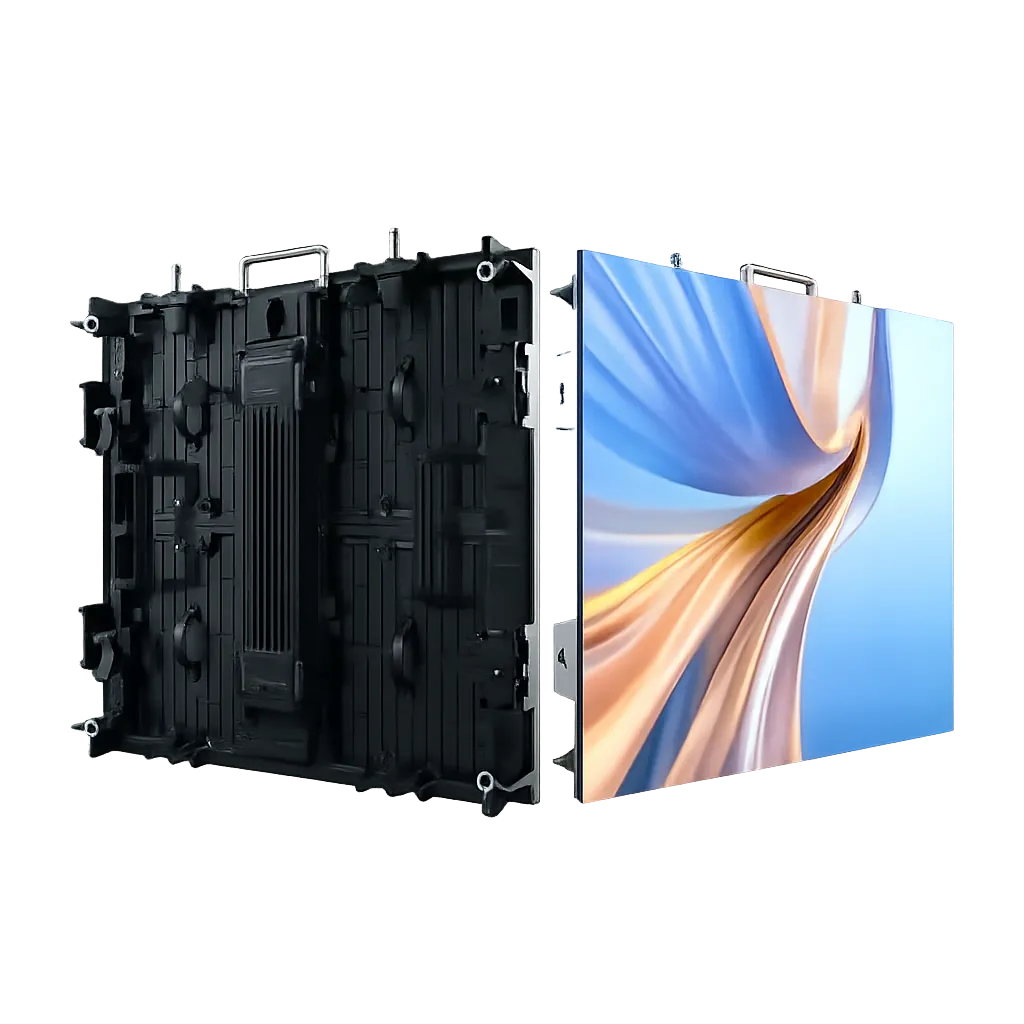
FA1.95 / FA2.6 / FA2.97 use 500×500 mm cabinets; FA3.91 uses 500×1000 mm.
Calibration & Environmental Control
Flatness, temperature, enclosure protection and mounting geometry are not separate marketing features. They are four conditions that determine whether the finished screen remains visually consistent and serviceable.
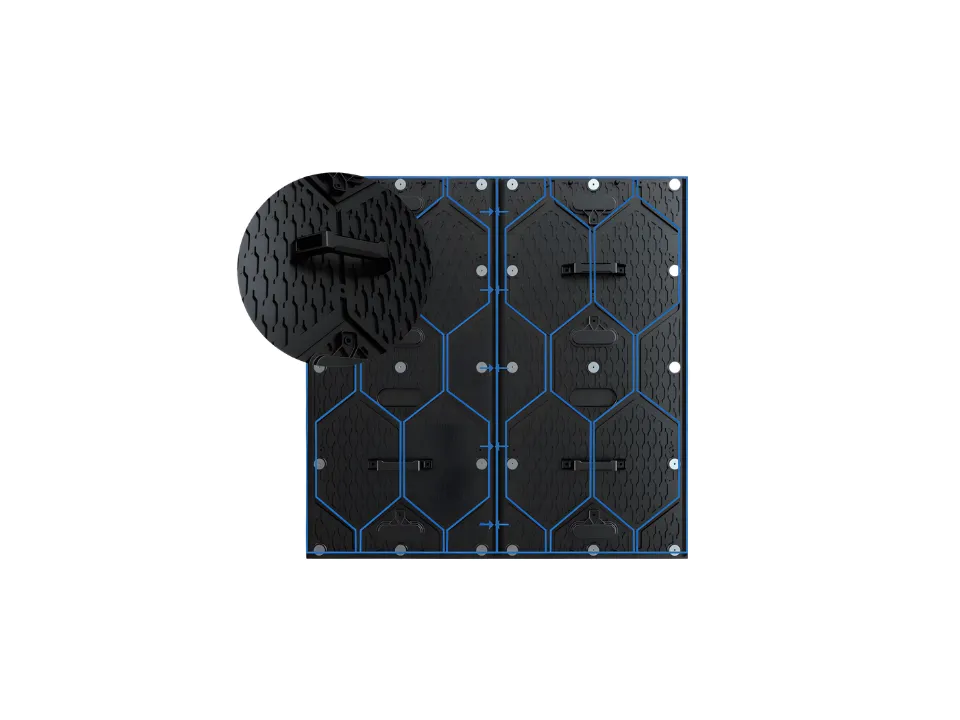
Screen Flatness
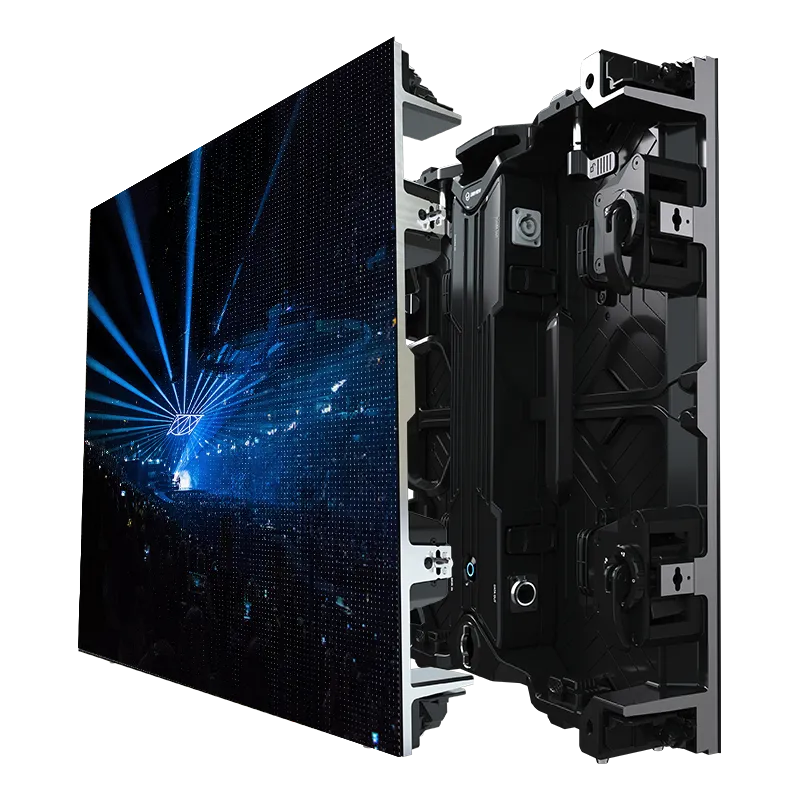
Finished-screen flatness and seam consistency also depend on steel tolerance, cabinet leveling, module seating and calibration. Inspect horizontal and vertical seams with bright, dark and low-gray test patterns.
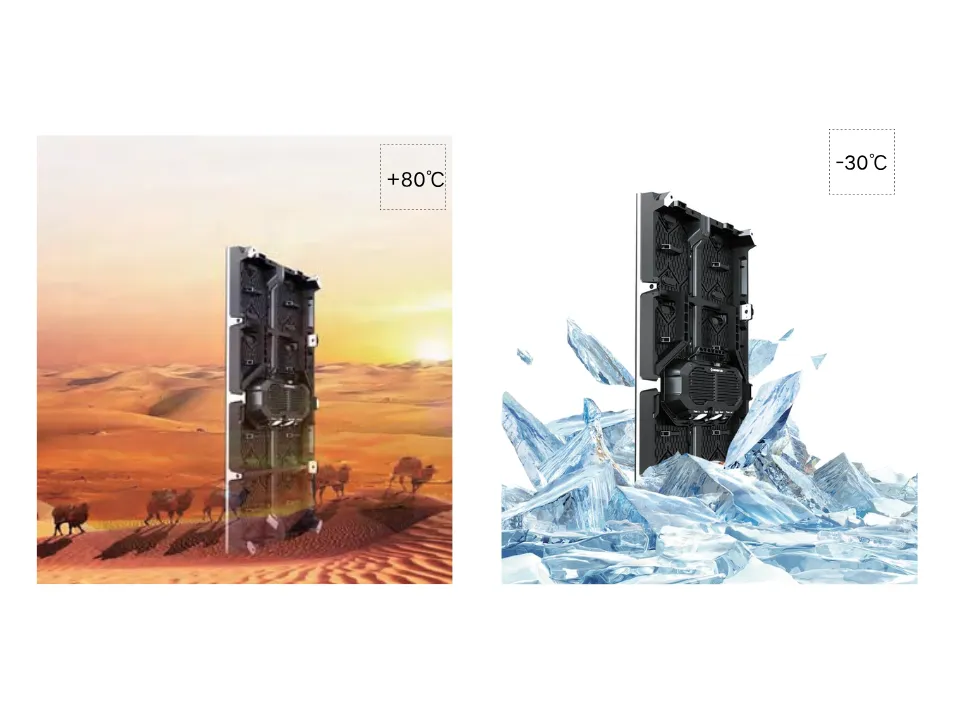
Use the site’s worst-case solar load, rear ventilation, cabinet spacing and power configuration to verify heat rejection and any required derating.
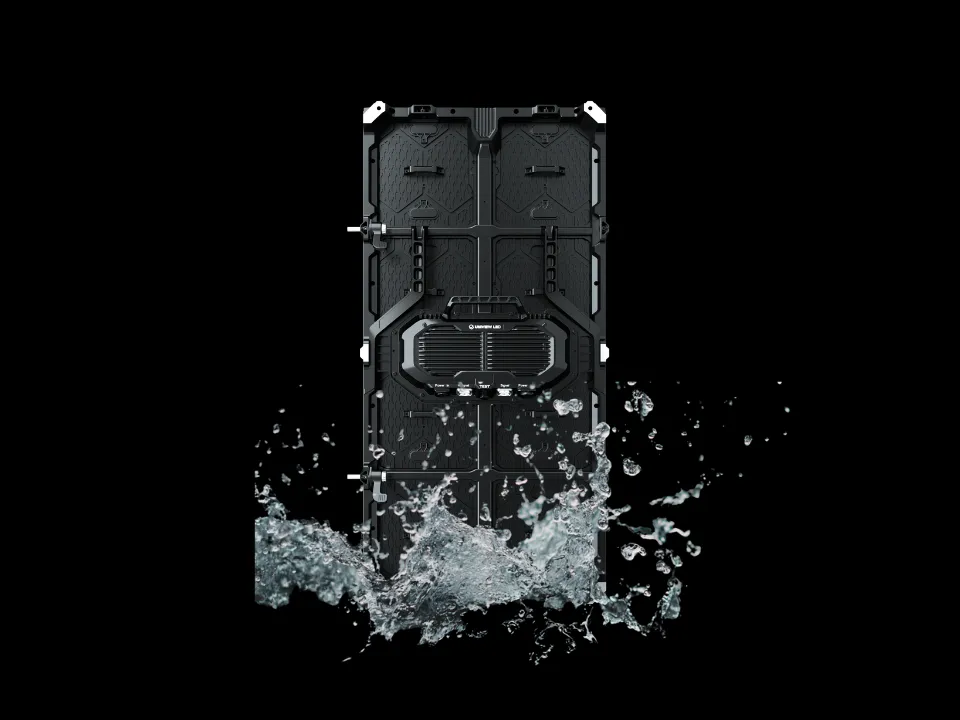
Preserve the specified protection through cable entries, drainage, ventilation and service procedures. Exposed rear areas require separate weather review.
Installation Geometry
Confirm cabinet orientation, lifting points, service access, structural loads, power and signal routes and approved drawings before production.
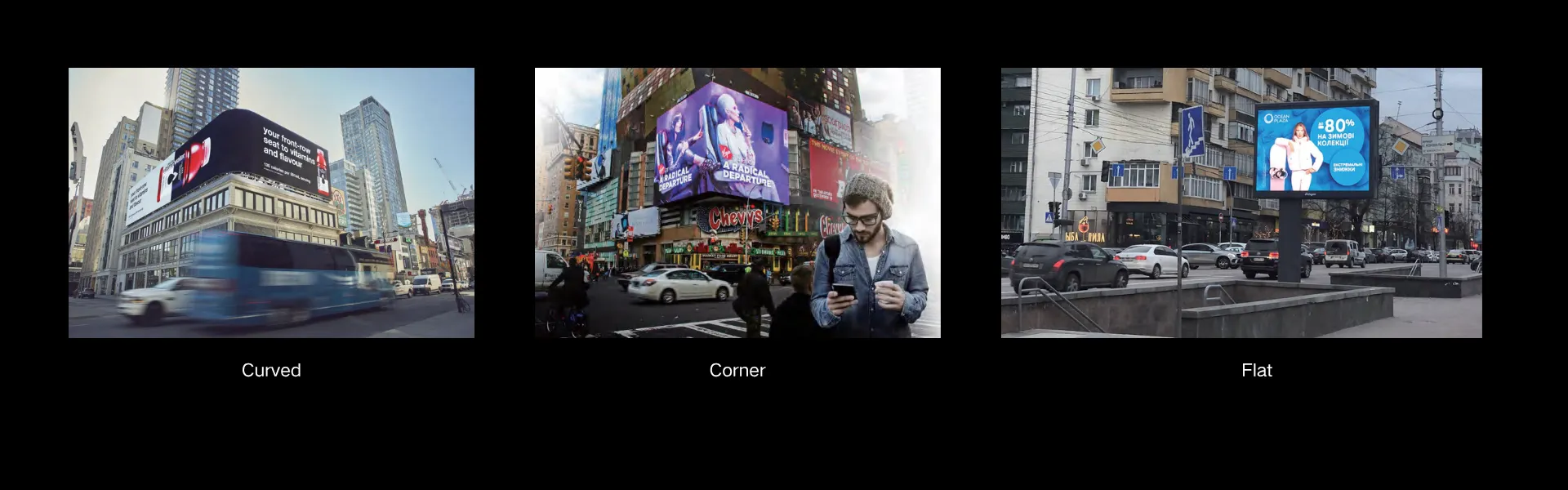
Exposure Matrix
Select pixel pitch, brightness and service strategy from the real site rather than from the venue label alone.
Long operating hours, direct daylight and fast viewing demand strong luminance control and simple service access.
Priority: daylight + uptimeCabinet depth, flatness, drainage and structural tolerance directly affect architectural integration.
Priority: alignment + integrationCloser pedestrian viewing and bright surroundings increase the importance of pixel pitch and glare-aware brightness planning.
Priority: detail + exposureLong operating schedules require readable content, planned maintenance windows and robust power and data routes.
Priority: readability + serviceField Reference
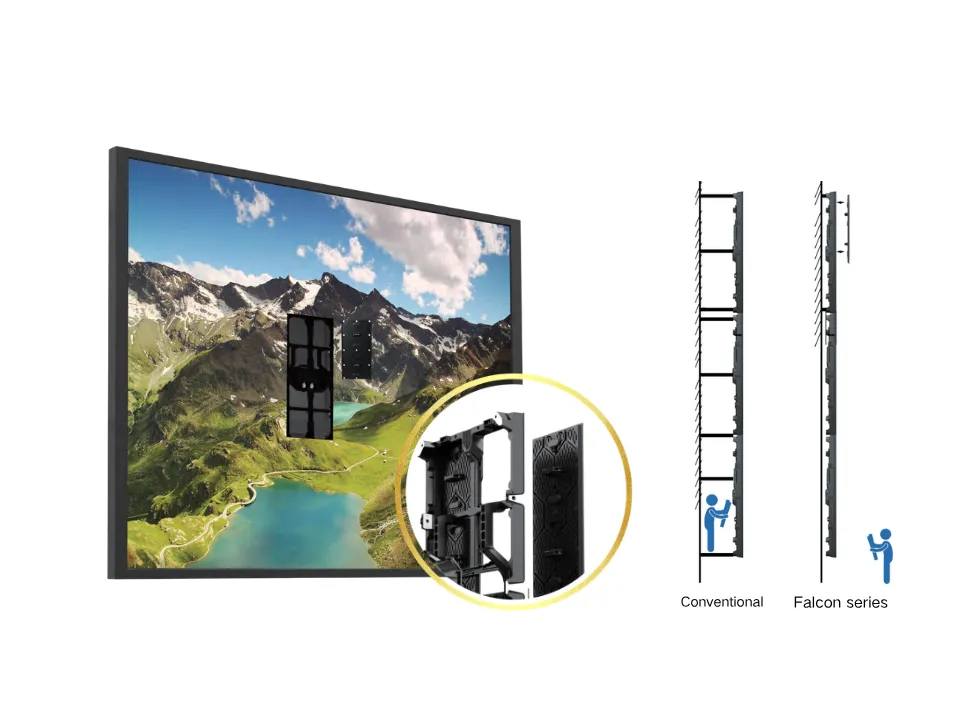
Cabinet Size & Service
Falcon Series uses two cabinet formats with a common 94.7 mm depth. The 500 × 500 mm format covers FA1.95, FA2.6 and FA2.97, while FA3.91 uses a 500 × 1,000 mm vertical cabinet.
Core Specifications
Six core outdoor parameters are shown for fast model comparison. Cabinet weight and native resolution remain available in the cabinet and project-planning content.
| Parameter | FA1.95 (COT) | FA2.6 (COT) | FA2.97 | FA3.91 |
|---|---|---|---|---|
| Pixel Pitch | 1.953 mm | 2.604 mm | 2.976 mm | 3.906 mm |
| Brightness | 3,000 nits | 3,000 nits | 4,500 nits | 4,500 nits |
| Refresh Rate | 7,680 Hz | 7,680 Hz | 7,680 Hz | 7,680 Hz |
| Cabinet Size | 500 × 500 × 94.7 mm | 500 × 500 × 94.7 mm | 500 × 500 × 94.7 mm | 500 × 1,000 × 94.7 mm |
| Power Consumption (Max / Avg) | 610 / 205 W/m² | 610 / 205 W/m² | 610 / 205 W/m² | 610 / 205 W/m² |
| Protection / Service | IP65 front / IP54 rear · Front & rear | IP65 front / IP54 rear · Front & rear | IP65 front / IP54 rear · Front & rear | IP65 front / IP54 rear · Front & rear |
Commissioning Gate
Falcon’s final visual quality depends on the system around the cabinet as much as the cabinet itself.
Confirm active dimensions, cabinet count, native resolution and controller capacity.
Verify leveling tolerance, lifting method and front or rear service path.
Check feeders, grounding, controller outputs, routes and required redundancy.
Retain calibration data and define spare modules, power supplies and receiving cards.
Buyer FAQ
Six practical questions covering pixel pitch, brightness, project cost, refresh rate, weather protection and front service.
Use the closest regular viewing distance, active display dimensions, content detail and target resolution. The datasheets indicate approximately 2 m for FA1.95, 3 m for FA2.6 or FA2.97, and 4 m for FA3.91 as recommended minimum viewing distances.
FA1.95 and FA2.6 are rated at 3,000 nits, while FA2.97 and FA3.91 are rated at 4,500 nits. Final suitability depends on screen orientation, direct-sun exposure, ambient light, local dimming limits and heat management.
There is no reliable single price because total project cost changes with pixel pitch, screen area, cabinet count, steel structure, control system, power distribution, installation, freight and service requirements. For an accurate quotation, provide the active dimensions, viewing distance, project country, mounting method and site drawings.
All four Falcon models are specified at 7,680 Hz, providing a strong starting point for camera-facing outdoor content. Final results also depend on scan configuration, shutter speed, frame rate, controller settings, operating brightness and calibration.
Falcon is specified at IP65 on the front and IP54 on the rear. The completed installation must preserve these protection boundaries through cable entries, drainage, ventilation, seals and service procedures. Exposed rear areas require separate environmental review.
Falcon supports both front and rear maintenance. Whether a rear corridor can be omitted depends on the mounting structure, module extraction path, cable routing, ventilation and power-box access. Define the service side before steelwork is finalized.